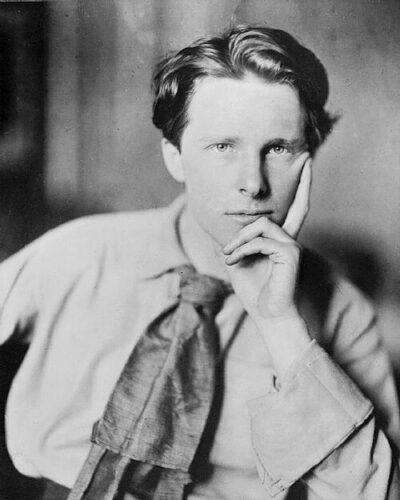
The Old Vicarage, Grantchester
The Old Vicarage, Grantchester is a poem by the English Georgian poet Rupert Brooke. It came out in 1912.
- Came out
- 1912
- Written by
- Rupert Brooke
All 4 facts, and where they come from
Facts
4 facts · 0 confirmed by two sources · 0 cited · 4 from one source
Where this comes from
Papalocal keeps its own record. It started from these sources; what each one said is kept here as it was copied, so a change on their side never changes this page by itself. Tap one to read its version.
What Wikidata says · copied November 17, 2026 · revision 2439652789
- Described as
- poem by the English Georgian poet Rupert Brooke
- What it is
- literary work
- Written by
- Rupert Brooke
- Language
- English
- Came out
- 1912
- Wikipedias with a page
- 2
Wikidata item Q18162794 (wikidata.org/wiki/Q18162794), public domain (CC0). Copied 2026-11-17.
What Wikipedia says · copied November 17, 2026 · revision 1365308543
"The Old Vicarage, Grantchester" is a light poem by the English Georgian poet Rupert Brooke (1887–1915), written in Berlin in 1912. Initially titled "The Sentimental Exile", Brooke, with help from his friend Edward Marsh, gave it the title by which it is now known.
The title refers to the Old Vicarage, a house Brooke briefly lived in the village of Grantchester near Cambridge. The poem's references can be overly obscure because of the many specific Cambridgeshire locations (such as "Haslingfield and Coton") and English traditions to which the poem refers. Some, including George Orwell, have seen it as sentimentally nostalgic, while others have recognised its satiric and sometimes cruel humour.
Using octosyllabics—a metre Brooke often employed—Brooke writes of Grantchester and other nearby villages. It is very much a poem of "place": the place where Brooke composed the work, Berlin and the Café des Westens, and the contrast of that German world ("Here am I, sweating, sick, and hot") with his home in England. Yet it is more than just the longing of an exile for his home, nostalgically imagined. The landscape of Cambridgeshire is reproduced in the poem, but Brooke, the academic, populates this English world with allusions and references from history and myth. He compares the countryside to a kind of Greek Arcadia, home to nymphs and fauns, and refers to such famous literary figures as Lord Byron, Geoffrey Chaucer, and Tennyson. Homesick for England, a land "Where men with Splendid Hearts may go", it is Grantchester, in particular, that he desires. The poem ends with the specificity of place, referring to the Church of St Andrew and St Mary and the tea garden known as The Orchard.
From the Wikipedia article “The Old Vicarage, Grantchester” (en.wikipedia.org/wiki/The_Old_Vicarage,_Grantchester), by its contributors, under CC BY-SA 4.0 (creativecommons.org/licenses/by-sa/4.0/). Copied 2026-11-17; not changed.
Confirmed Two sources agree. Cited One source, and it names where it got it. One source One source, without a reference of its own. Sources disagree The sources disagree. We show the best-supported value and keep theirs below.