The Phantom Tollbooth
The Phantom Tollbooth is a 1961 novel by Norton Juster.
- Published
- August 12, 1961
- Written by
- Norton Juster
- Genre
- fantasy
- Country of origin
- United States
All 8 facts, and where they come from
Facts
8 facts · 0 confirmed by two sources · 2 cited · 6 from one source
Where this comes from
Papalocal keeps its own record. It started from these sources; what each one said is kept here as it was copied, so a change on their side never changes this page by itself. Tap one to read its version.
What Wikidata says · copied November 17, 2026 · revision 2555879824
- Described as
- 1961 novel by Norton Juster
- What it is
- literary work
- Written by
- Norton Juster · 2 references
- Genre
- fantasy; adventure fiction; children's fiction
- Published
- August 12, 1961 · 1 reference
- Language
- English · 1 reference
- Country of origin
- United States
- Wikipedias with a page
- 12
Wikidata item Q149993 (wikidata.org/wiki/Q149993), public domain (CC0). Copied 2026-11-17.
What Wikipedia says · copied November 17, 2026 · revision 1385985559
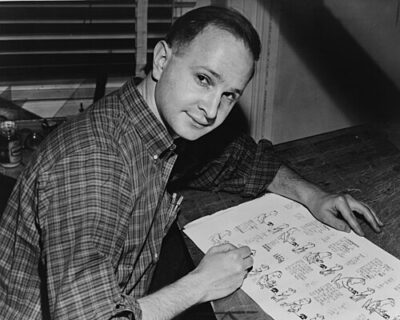
The Phantom Tollbooth is a children's fantasy novel written by Norton Juster, with illustrations by Jules Feiffer, first published in 1961. The story follows a bored young boy named Milo who unexpectedly receives a magic tollbooth that transports him to the once prosperous, but now troubled, Kingdom of Wisdom. Along with a dog named Tock and the Humbug, Milo goes on a quest to the Castle in the Air seeking the kingdom's two exiled princesses, named Rhyme and Reason. As Milo learns valuable lessons, he finds a love of learning in a story full of puns and wordplay, such as exploring the literal meanings of idioms.
In 1958, Juster had received a Ford Foundation grant for a children's book about cities. Unable to make progress on that project, he turned to writing what became The Phantom Tollbooth, his first book. His housemate, Feiffer, a cartoonist, interested himself in the project. Jason Epstein, an editor at Random House, bought the book and published it. The Phantom Tollbooth received rave reviews and has as of 2021 sold almost five million copies, far more than expected. It has been adapted into a film, opera, and play, and translated into many languages.
Though the book is on its face an adventure story, a major theme is the need for a love of education; through this, Milo applies what he has learned in school, advances in his personal development, and learns to love the life that previously bored him. Critics have compared its appeal to that of Lewis Carroll's Alice's Adventures in Wonderland and to L. Frank Baum's The Wonderful Wizard of Oz. Additionally Maurice Sendak, in his introductory "An Appreciation" included in editions of the book since 1996, quotes a critic as comparing The Phantom Tollbooth to John Bunyan's Pilgrim's Progress: "As Pilgrim's Progress is concerned with the awakening of the sluggardly spirit, The Phantom Tollbooth is concerned with the awakening of the lazy mind."
From the Wikipedia article “The Phantom Tollbooth” (en.wikipedia.org/wiki/The_Phantom_Tollbooth), by its contributors, under CC BY-SA 4.0 (creativecommons.org/licenses/by-sa/4.0/). Copied 2026-11-17; not changed.
Confirmed Two sources agree. Cited One source, and it names where it got it. One source One source, without a reference of its own. Sources disagree The sources disagree. We show the best-supported value and keep theirs below.