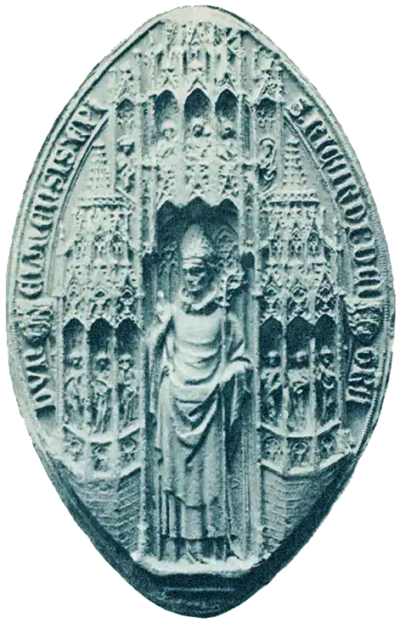
The Philobiblon
The Philobiblon is a 14th-century text by Richard de Bury. It came out in 1345.
- Came out
- 1345
- Written by
- Richard de Bury
All 6 facts, and where they come from
Facts
6 facts · 0 confirmed by two sources · 1 cited · 5 from one source
Where this comes from
Papalocal keeps its own record. It started from these sources; what each one said is kept here as it was copied, so a change on their side never changes this page by itself. Tap one to read its version.
What Wikidata says · copied November 17, 2026 · revision 2549429727
- Described as
- 14th-century text by Richard de Bury
- Other names
- Philobiblon (Love of Books)
- What it is
- written work; literary work
- Written by
- Richard de Bury
- Language
- Latin
- Came out
- 1345
- Field
- translating activity · 1 reference
- Wikipedias with a page
- 6
Wikidata item Q13513804 (wikidata.org/wiki/Q13513804), public domain (CC0). Copied 2026-11-17.
What Wikipedia says · copied November 17, 2026 · revision 1382099117
The Philobiblon, or The Love of Books, is a collection of essays concerning the acquisition, preservation, and organization of books, written by the medieval English bibliophile Richard de Bury shortly before his death in 1345. The purposes of the Philobiblon were "to encourage the pursuit of learning contained in books; to justify the time and money [de Bury] spent on them; and to give practical advice for the formation of running of a library." Written in Latin, as was the custom of the day, it is separated into twenty chapters, each covering a different topic relating to book collecting.
Whether or not de Bury was the actual author of the Philobiblon has been disputed. The controversy began because Bishop de Bury's biographer Chambres neglects to mention the book at all in de Bury's biography. It was once thought that de Bury's chaplain, Robert Holkot, was the author and a substantial body of evidence was gathered to argue that this was the case. Today, however, most experts agree that the work is indeed de Bury's, chiefly due to the revealing and autobiographical nature of the book.
From the Wikipedia article “The Philobiblon” (en.wikipedia.org/wiki/The_Philobiblon), by its contributors, under CC BY-SA 4.0 (creativecommons.org/licenses/by-sa/4.0/). Copied 2026-11-17; not changed.
Confirmed Two sources agree. Cited One source, and it names where it got it. One source One source, without a reference of its own. Sources disagree The sources disagree. We show the best-supported value and keep theirs below.
Picture: Wikimedia Commons: Philobiblon 004.tif · See Commons file page