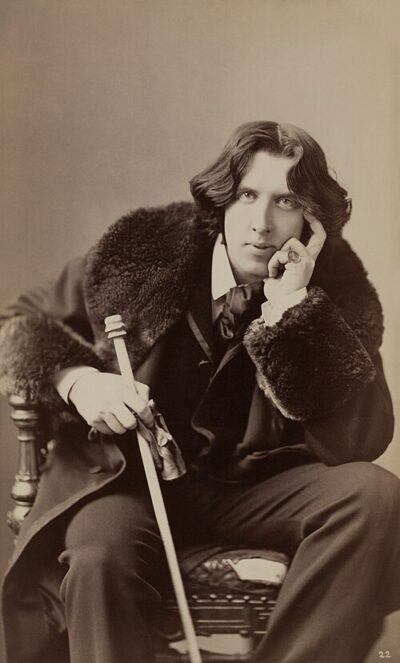
The Picture of Dorian Gray
The Picture of Dorian Gray is a 1890–1891 novel by Oscar Wilde.
- Published
- 1890
- Written by
- Oscar Wilde
- Genre
- Gothic novel
- Country of origin
- United Kingdom
All 7 facts, and where they come from
Facts
7 facts · 0 confirmed by two sources · 5 cited · 2 from one source
Where this comes from
Papalocal keeps its own record. It started from these sources; what each one said is kept here as it was copied, so a change on their side never changes this page by itself. Tap one to read its version.
What Wikidata says · copied November 17, 2026 · revision 2525017400
- Described as
- 1890–1891 novel by Oscar Wilde
- Other names
- Picture of Dorian Gray, El retrato de Dorian Gray
- What it is
- literary work · 1 reference
- Written by
- Oscar Wilde · 3 references
- Genre
- Gothic novel
- Published
- 1890; 1891 · 1 reference
- Language
- English · 1 reference
- Country of origin
- United Kingdom · 1 reference; Ireland · 1 reference
- Wikipedias with a page
- 82
Wikidata item Q82464 (wikidata.org/wiki/Q82464), public domain (CC0). Copied 2026-11-17.
What Wikipedia says · copied November 17, 2026 · revision 1384221123
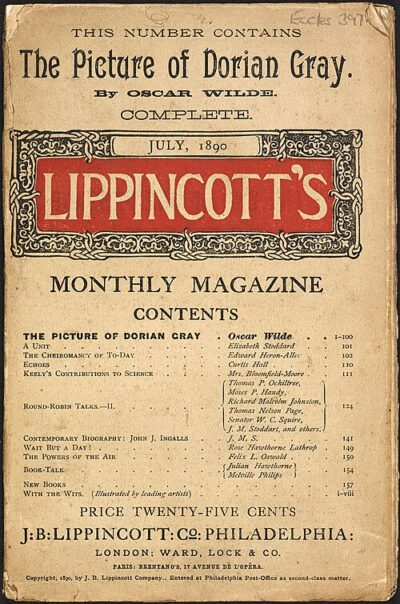
The Picture of Dorian Gray is an 1890 philosophical fiction and Gothic horror novel by Irish author Oscar Wilde. A shorter novella-length version was published in the July 1890 issue of the American periodical Lippincott's Monthly Magazine, while the novel-length version was published in April 1891. As the only novel written by Wilde, it is widely regarded as a classic of both Gothic and English literature, having been adapted many times for films, stage, plays, and other forms of art performances.
The story revolves around a portrait of Dorian Gray painted by Basil Hallward, a friend of Dorian's and an artist infatuated with Dorian's beauty. Through Basil, Dorian meets Lord Henry Wotton and is soon enthralled by the aristocrat's hedonistic worldview: that beauty and sensual fulfilment are the only things worth pursuing in life. Knowing that he will lose his beauty with time, Dorian impulsively chooses to sell his soul and asks for the portrait, rather than himself, to age and fade. His wish granted, Dorian pursues a libertine life of varied immoral experiences while staying young and beautiful; all the while, his portrait ages and visually records every one of Dorian's sins.
The Picture of Dorian Gray was initially subjected to significant controversy and criticism following its publication. Largely ignored until the 1980s, it has come to be recognised as one of Wilde's best-known works, attracting critical academic and popular interest, and it remains one of the most widely read Gothic novels. The Guardian listed it among the 100 best novels ever written in English, and the book has inspired the Dorian Awards since 2009.
From the Wikipedia article “The Picture of Dorian Gray” (en.wikipedia.org/wiki/The_Picture_of_Dorian_Gray), by its contributors, under CC BY-SA 4.0 (creativecommons.org/licenses/by-sa/4.0/). Copied 2026-11-17; not changed.
Confirmed Two sources agree. Cited One source, and it names where it got it. One source One source, without a reference of its own. Sources disagree The sources disagree. We show the best-supported value and keep theirs below.
Picture: Unknown author, via Wikimedia Commons · Public domain