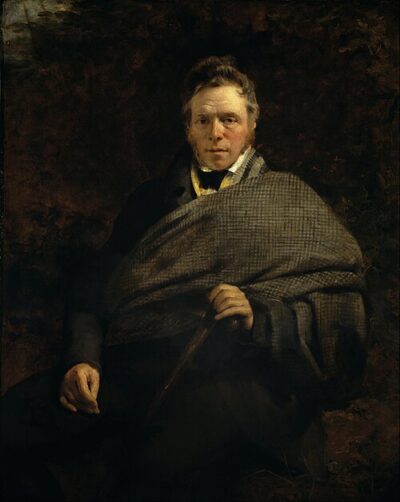
The Private Memoirs and Confessions of a Justified Sinner
The Private Memoirs and Confessions of a Justified Sinner is a novel by James Hogg. It came out in 1824.
- Published
- 1824
- Written by
- James Hogg
- Genre
- satirical fiction
- Country of origin
- Scotland
All 9 facts, and where they come from
Facts
9 facts · 0 confirmed by two sources · 2 cited · 7 from one source
Where this comes from
Papalocal keeps its own record. It started from these sources; what each one said is kept here as it was copied, so a change on their side never changes this page by itself. Tap one to read its version.
What Wikidata says · copied November 17, 2026 · revision 2493373445
- Described as
- novel by James Hogg
- What it is
- literary work
- Written by
- James Hogg · 1 reference
- Genre
- satirical fiction; Gothic fiction; philosophical fiction
- Published
- 1824 · 1 reference
- Language
- English; Scots
- Country of origin
- Scotland
- Wikipedias with a page
- 8
Wikidata item Q2992437 (wikidata.org/wiki/Q2992437), public domain (CC0). Copied 2026-11-17.
What Wikipedia says · copied November 17, 2026 · revision 1384244660
The Private Memoirs and Confessions of a Justified Sinner: Written by Himself: With a detail of curious traditionary facts and other evidence by the editor is a novel by the Scottish author James Hogg, published anonymously in 1824.
The plot concerns Robert Wringhim, a staunch Calvinist who, under the influence of the mysterious Gil-Martin, believes he is guaranteed Salvation and justified in killing those he believes are already damned by God. The novel has been classified among many genres, including gothic novel, psychological mystery, metafiction, satire and the study of totalitarian thought; it can also be thought of as an early example of modern crime fiction in which the story is told, for the most part, from the point of view of its criminal anti-hero. The action of the novel is located in a historically definable Scotland with accurately observed settings, and simultaneously implies a quasi-Christian world of angels, devils, and demonic possession. The narrative is set against the antinomian societal structure flourishing in the borders of Scotland in Hogg's day.
The first edition sold very poorly and the novel suffered from a period of critical neglect, especially in the nineteenth century. However, from the second half of the twentieth century it started winning greater critical interest and attention. It was praised by André Gide in an introduction to the 1947 reissue and described by the critic Walter Allen as 'the most convincing representation of the power of evil in our literature'. It has also been seen as a study of religious fanaticism through its deeply critical portrait of the Calvinist concept of predestination. It is written in English, with some sections of Scots that appear in dialogue. The demonic character Gil-Martin may be a reference to the Gaelic word gille-Màrtainn (a poetic term for a fox).
From the Wikipedia article “The Private Memoirs and Confessions of a Justified Sinner” (en.wikipedia.org/wiki/The_Private_Memoirs_and_Confessions_of_a_Justified_Sinner), by its contributors, under CC BY-SA 4.0 (creativecommons.org/licenses/by-sa/4.0/). Copied 2026-11-17; not changed.
Confirmed Two sources agree. Cited One source, and it names where it got it. One source One source, without a reference of its own. Sources disagree The sources disagree. We show the best-supported value and keep theirs below.