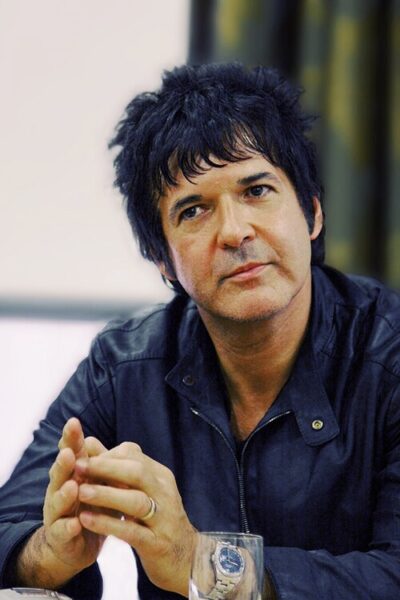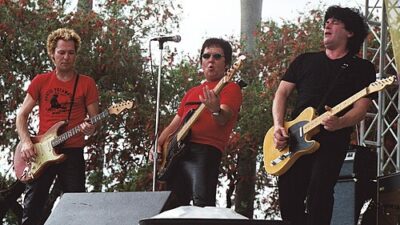
The Romantics
The Romantics is an American New Wave band. It was founded in 1977.
- Founded
- 1977
- Genre
- new wave
- Record label
- Nemperor Records
- Country of origin
- United States
All 6 facts, and where they come from
Facts
6 facts · 0 confirmed by two sources · 0 cited · 6 from one source
Where this comes from
Papalocal keeps its own record. It started from these sources; what each one said is kept here as it was copied, so a change on their side never changes this page by itself. Tap one to read its version.
What Wikidata says · copied November 17, 2026 · revision 2549156478
- Described as
- American New Wave band
- Other names
- Romantics
- What it is
- musical group
- Genre
- new wave
- Country of origin
- United States
- Record label
- Nemperor Records
- Founded
- 1977
- Official website
- http://www.romanticsdetroit.com/ · 1 reference
- Wikipedias with a page
- 10
Wikidata item Q599609 (wikidata.org/wiki/Q599609), public domain (CC0). Copied 2026-11-17.
What Wikipedia says · copied November 17, 2026 · revision 1384929014
The Romantics are an American rock band formed in 1977 in Detroit, Michigan. The band's music is often categorized as power pop and new wave. They were influenced by 1950s American rock and roll, Detroit's MC5, the Stooges, early Bob Seger, Motown R&B, 1960s North American garage rock as well as the British Invasion rockers.
The Romantics achieved substantial popularity in the United States, Belgium, the Netherlands, Germany, Canada, and Australia, with their two best-charting songs "What I Like About You", peaking at #49 in the US and #2 in Australia, and "Talking in Your Sleep", reaching #3 in the US, #1 in Canada, and #14 in Australia. The two songs have become mainstays on 1980s-focused, classic rock, and active rock radio stations.
From the Wikipedia article “The Romantics” (en.wikipedia.org/wiki/The_Romantics), by its contributors, under CC BY-SA 4.0 (creativecommons.org/licenses/by-sa/4.0/). Copied 2026-11-17; not changed.
Confirmed Two sources agree. Cited One source, and it names where it got it. One source One source, without a reference of its own. Sources disagree The sources disagree. We show the best-supported value and keep theirs below.
Picture: Carl Lender at https://www.flickr.com/photos/clender/, via Wikimedia Commons · CC BY-SA 3.0