The Spirit of the Age
The Spirit of the Age is a book by William Hazlitt.
- Written by
- William Hazlitt
- Genre
- social commentary
- Country of origin
- England
All 7 facts, and where they come from
Facts
7 facts · 0 confirmed by two sources · 0 cited · 7 from one source
Where this comes from
Papalocal keeps its own record. It started from these sources; what each one said is kept here as it was copied, so a change on their side never changes this page by itself. Tap one to read its version.
What Wikidata says · copied November 17, 2026 · revision 2384139970
- Described as
- book by William Hazlitt
- What it is
- written work
- Written by
- William Hazlitt
- Publisher
- Henry Colburn
- Genre
- social commentary; biography
- Language
- English
- Country of origin
- England · 1 reference
- Wikipedias with a page
- 2
Wikidata item Q7765949 (wikidata.org/wiki/Q7765949), public domain (CC0). Copied 2026-11-17.
What Wikipedia says · copied November 17, 2026 · revision 1384381238
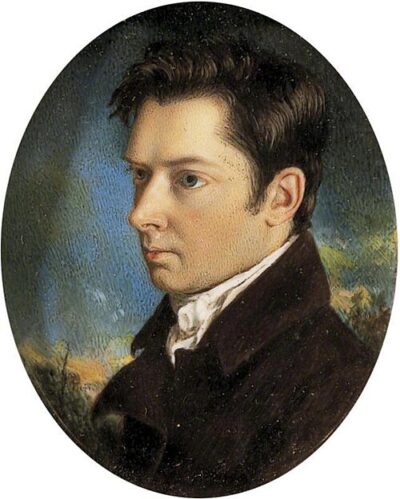
The Spirit of the Age (full title The Spirit of the Age: Or, Contemporary Portraits) is a collection of character sketches by the early 19th century English essayist, literary critic, and social commentator William Hazlitt, portraying 25 men, mostly British, whom he believed to represent significant trends in the thought, literature, and politics of his time. The subjects include thinkers, social reformers, politicians, poets, essayists, and novelists, many of whom Hazlitt was personally acquainted with or had encountered. Originally appearing in English periodicals, mostly The New Monthly Magazine in 1824, the essays were collected with several others written for the purpose and published in book form in 1825.
The Spirit of the Age was one of Hazlitt's most successful books. It is frequently judged to be his masterpiece, even "the crowning ornament of Hazlitt's career, and ... one of the lasting glories of nineteenth-century criticism." Hazlitt was also a painter and an art critic, yet no artists number among the subjects of these essays. His artistic and critical sensibility, however, infused his prose style—Hazlitt was later judged to be one of the greatest of English prose stylists as well—enabling his appreciation of portrait painting to help him bring his subjects to life. His experience as a literary, political, and social critic contributed to Hazlitt's solid understanding of his subjects' achievements, and his judgements of his contemporaries were later often deemed to have held good after nearly two centuries.
The Spirit of the Age, despite its essays' uneven quality, has been generally agreed to provide "a vivid panorama of the age". Yet, missing an introductory or concluding chapter, and with few explicit references to any themes, it was for long also judged as lacking in coherence and hastily thrown together. More recently, critics have found in it a unity of design, with the themes emerging gradually, by implication, in the course of the essays and even supported by their grouping and presentation. Hazlitt also incorporated into the essays a vivid, detailed and personal, "in the moment" kind of portraiture that amounted to a new literary form and significantly anticipated modern journalism.
From the Wikipedia article “The Spirit of the Age” (en.wikipedia.org/wiki/The_Spirit_of_the_Age), by its contributors, under CC BY-SA 4.0 (creativecommons.org/licenses/by-sa/4.0/). Copied 2026-11-17; not changed.
Confirmed Two sources agree. Cited One source, and it names where it got it. One source One source, without a reference of its own. Sources disagree The sources disagree. We show the best-supported value and keep theirs below.