The Spirit of the Laws
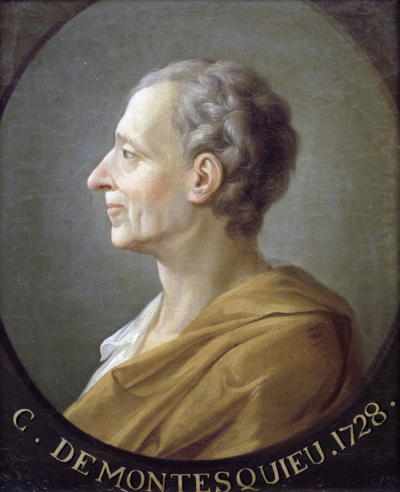
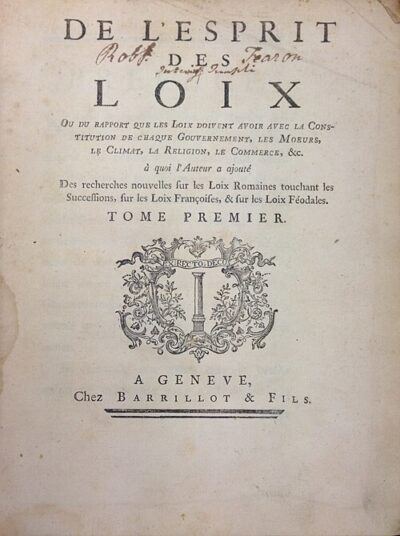
The Spirit of the Laws is a 1748 treatise on political theory first published anonymously by Charles-Louis de Secondat, baron de Montesquieu.
- Published
- 1748
- Written by
- Montesquieu
- Genre
- political theory
- Country of origin
- France
All 8 facts, and where they come from
Facts
8 facts · 0 confirmed by two sources · 0 cited · 8 from one source
Where this comes from
Papalocal keeps its own record. It started from these sources; what each one said is kept here as it was copied, so a change on their side never changes this page by itself. Tap one to read its version.
What Wikidata says · copied November 17, 2026 · revision 2550197251
- Described as
- 1748 treatise on political theory first published anonymously by Charles-Louis de Secondat, baron de Montesquieu
- Other names
- De l'esprit des lois, De l'esprit des loix, Spirit of the Laws, Spirit of the Law, The Spirit of the Law, The Spirit of Laws, Spirit of Laws, Spirit of Law, The Spirit of Law, Esprit des Lois
- What it is
- written work
- Written by
- Montesquieu
- Genre
- political theory
- Published
- 1748; 1750
- Language
- French
- Country of origin
- France
- Field
- philosophy of law; political philosophy
- Wikipedias with a page
- 42
Wikidata item Q514727 (wikidata.org/wiki/Q514727), public domain (CC0). Copied 2026-11-17.
What Wikipedia says · copied November 17, 2026 · revision 1384799087
The Spirit of Law (French: De l'esprit des lois, originally spelled De l'esprit des loix), also known in English as The Spirit of [the] Laws, is a treatise on political theory, as well as a pioneering work in comparative law by Montesquieu, published in 1748. Originally published anonymously, as was the norm, its influence outside France was aided by its rapid translation into other languages. In 1750, Thomas Nugent published an English translation, which has been revised and reprinted many times. In 1751, the Roman Catholic Church added De l'esprit des lois to its Index Librorum Prohibitorum ("List of Prohibited Books").
Montesquieu's treatise, already widely disseminated, had an enormous influence on the work of many others, most notably: Catherine the Great, who produced Nakaz (Instruction); the Founding Fathers of the United States Constitution; and Alexis de Tocqueville, who applied Montesquieu's methods to a study of American society, in Democracy in America. British historian and politician Macaulay referenced Montesquieu's continuing importance when he wrote in his 1827 essay entitled "Machiavelli" that "Montesquieu enjoys, perhaps, a wider celebrity than any political writer of modern Europe".
Montesquieu spent about ten years and a lifetime of thought researching and writing De l'esprit des lois, covering a wide range of topics including law, social life, and anthropology. In this treatise, Montesquieu argues that political institutions need, for their success, to reflect the social and geographical aspects of the particular community. He pleads for a constitutional system of government with separation of powers, preservation of law, and civil liberties.
From the Wikipedia article “The Spirit of Law” (en.wikipedia.org/wiki/The_Spirit_of_Law), by its contributors, under CC BY-SA 4.0 (creativecommons.org/licenses/by-sa/4.0/). Copied 2026-11-17; not changed.
Confirmed Two sources agree. Cited One source, and it names where it got it. One source One source, without a reference of its own. Sources disagree The sources disagree. We show the best-supported value and keep theirs below.
Picture: Smuconlaw., via Wikimedia Commons · Public domain