The Star-Spangled Banner
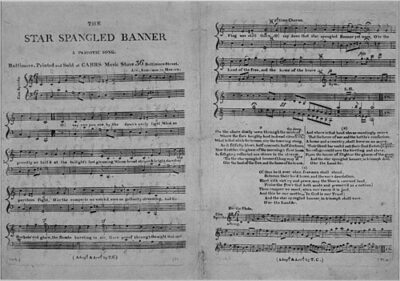
The Star-Spangled Banner is a national anthem of the United States of America. It came out in 1814. It is performed by Dolly Parton. It is based on Defence of Fort McHenry.
- Released
- 1814
- Came out
- 1814
- Performed by
- Dolly Parton
- Country of origin
- United States
All 12 facts, and where they come from
Facts
12 facts · 0 confirmed by two sources · 0 cited · 12 from one source
Where this comes from
Papalocal keeps its own record. It started from these sources; what each one said is kept here as it was copied, so a change on their side never changes this page by itself. Tap one to read its version.
What Wikidata says · copied November 17, 2026 · revision 2567812644
- Described as
- national anthem of the United States of America
- Other names
- anthem of the United States of America, SSB, Star Spangled Banner, The Star Spangled Banner, Star-Spangled Banner
- What it is
- musical work/composition; national anthem (1931–)
- Performed by
- Dolly Parton
- Music by
- John Stafford Smith
- Released
- 1814
- Language
- English
- Country of origin
- United States
- Based on
- Defence of Fort McHenry
- Came out
- 1814
- Country
- United States · 1 reference
- Named after
- flag of the United States; Star Spangled Banner Flag
- Wikipedias with a page
- 104
Wikidata item Q44696 (wikidata.org/wiki/Q44696), public domain (CC0). Copied 2026-11-17.
What Wikipedia says · copied November 17, 2026 · revision 1384895387
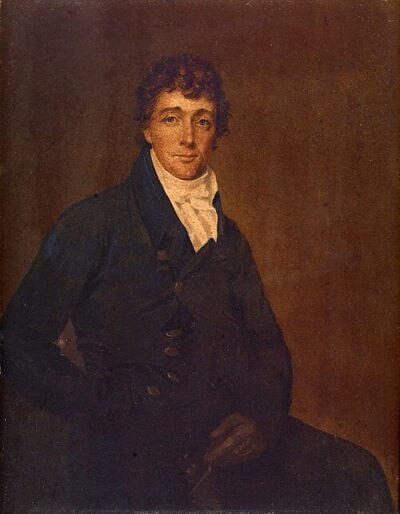
"The Star-Spangled Banner" is the national anthem of the United States. The lyrics come from the "Defence of Fort M'Henry", a poem written by American lawyer Francis Scott Key on September 14, 1814, after he witnessed the bombardment of Fort McHenry by the British Royal Navy during the Battle of Baltimore in the War of 1812. Key was inspired by the large U.S. flag, with 15 stars and 15 stripes, known as the Star-Spangled Banner, flying triumphantly above the fort after the battle.
The poem was set to the music of a popular British song written by John Stafford Smith for the Anacreontic Society, a gentlemen's club in London. Smith's song, "The Anacreontic Song", with various lyrics, was already popular in the United States. This setting, renamed "The Star-Spangled Banner", soon became a popular patriotic song. With a range of 19 semitones, it is known for being very difficult to sing, in part because the melody sung today is the soprano part. Although the poem has four stanzas, typically only the first is performed with the other three being rarely sung. Most performances of the song today are based on a 1918 arrangement authored by Walter Damrosch and John Philip Sousa on behalf of the U.S. Bureau of Education.
"The Star-Spangled Banner" was first recognized for official use by the United States Navy in 1889. On March 3, 1931, the U.S. Congress passed a joint resolution (46 Stat. 1508) making the song the official national anthem of the United States, which President Herbert Hoover signed into law. The resolution is now codified at 36 U.S.C. § 301(a).
From the Wikipedia article “The Star-Spangled Banner” (en.wikipedia.org/wiki/The_Star-Spangled_Banner), by its contributors, under CC BY-SA 4.0 (creativecommons.org/licenses/by-sa/4.0/). Copied 2026-11-17; not changed.
Confirmed Two sources agree. Cited One source, and it names where it got it. One source One source, without a reference of its own. Sources disagree The sources disagree. We show the best-supported value and keep theirs below.
Picture: Wikimedia Commons · Public domain