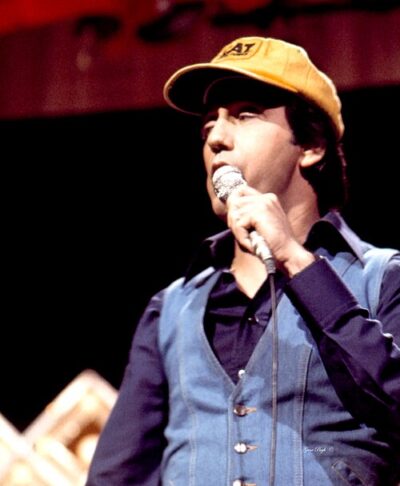
The Streak
The Streak is a 1974 single by Ray Stevens.
- Released
- March 27, 1974
- Performed by
- Ray Stevens
- Genre
- country music
- Country of origin
- United States
All 7 facts, and where they come from
Facts
7 facts · 0 confirmed by two sources · 0 cited · 7 from one source
Where this comes from
Papalocal keeps its own record. It started from these sources; what each one said is kept here as it was copied, so a change on their side never changes this page by itself. Tap one to read its version.
What Wikidata says · copied November 19, 2026 · revision 2481958798
- Described as
- 1974 single by Ray Stevens
- What it is
- single
- Performed by
- Ray Stevens
- Genre
- country music · 1 reference; novelty music
- Released
- March 27, 1974
- Country of origin
- United States
- Record label
- Barnaby Records
- Wikipedias with a page
- 2
Wikidata item Q7766982 (wikidata.org/wiki/Q7766982), public domain (CC0). Copied 2026-11-19.
What Wikipedia says · copied November 19, 2026 · revision 1385063950
"The Streak" is a country/novelty song written, produced, and sung by Ray Stevens. It was released in February 1974 as the lead single to his album Boogity Boogity. "The Streak" capitalized on the then-popular craze of streaking.
One of Stevens' most successful recordings, "The Streak" was his second number-one hit on the Billboard Hot 100 singles chart in the US, spending three weeks at the top in May 1974, as well as reaching number three on the Billboard Hot Country Singles chart. A major international hit, it also reached number one on the UK Singles Chart, spending a single week at the top of the chart in June 1974. In total it sold over five million copies internationally and ranked on Billboard′s top hits of 1974 at number 8.
From the Wikipedia article “The Streak (song)” (en.wikipedia.org/wiki/The_Streak_(song)), by its contributors, under CC BY-SA 4.0 (creativecommons.org/licenses/by-sa/4.0/). Copied 2026-11-19; not changed.
Confirmed Two sources agree. Cited One source, and it names where it got it. One source One source, without a reference of its own. Sources disagree The sources disagree. We show the best-supported value and keep theirs below.