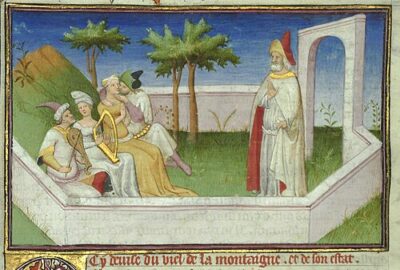
The Tale of the Three Schoolfellows
The Tale of the Three Schoolfellows is a medieval Persian tale.
- Genre
- didactic literature
- Country of origin
- Seljuk Empire
All 8 facts, and where they come from
Facts
8 facts · 0 confirmed by two sources · 0 cited · 8 from one source
Where this comes from
Papalocal keeps its own record. It started from these sources; what each one said is kept here as it was copied, so a change on their side never changes this page by itself. Tap one to read its version.
What Wikidata says · copied November 17, 2026 · revision 2459834672
- Described as
- medieval Persian tale
- Other names
- Tale of the Three Schoolfellows, Tale of Three Schoolfellows, Three Schoolfellows
- What it is
- literary work; anachronism
- Genre
- didactic literature; anecdote; fable; pseudohistory
- Language
- Persian
- Country of origin
- Seljuk Empire
- Wikipedias with a page
- 3
Wikidata item Q5940757 (wikidata.org/wiki/Q5940757), public domain (CC0). Copied 2026-11-17.
What Wikipedia says · copied November 17, 2026 · revision 1381778746
The medieval tale of the Three Schoolfellows (Persian: سه یار دبستانی) narrates how the vizier Nizam al-Mulk, the Nizari revolutionary Hasan-i Sabbah, and the mathematician-poet Omar Khayyam made a success-sharing pact when they were classmates in their youth, eventually leading to the assassination of the vizier by Hasan's followers, while the third was no longer interested in power.
The tale which is recorded in multiple classical Persian sources is considered folklore by most modern scholars, but some have argued that it is inspired by real events.
From the Wikipedia article “Three Schoolfellows” (en.wikipedia.org/wiki/Three_Schoolfellows), by its contributors, under CC BY-SA 4.0 (creativecommons.org/licenses/by-sa/4.0/). Copied 2026-11-17; not changed.
Confirmed Two sources agree. Cited One source, and it names where it got it. One source One source, without a reference of its own. Sources disagree The sources disagree. We show the best-supported value and keep theirs below.