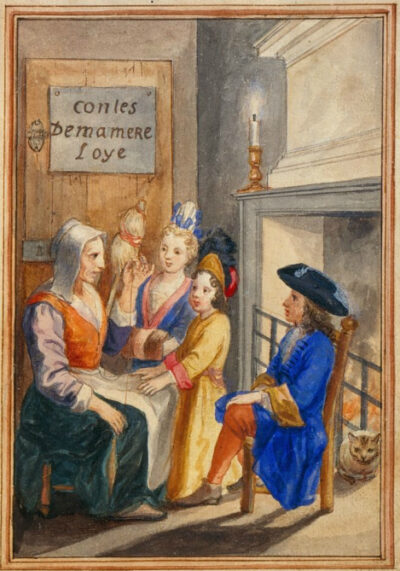
The Tales of my Mother Goose
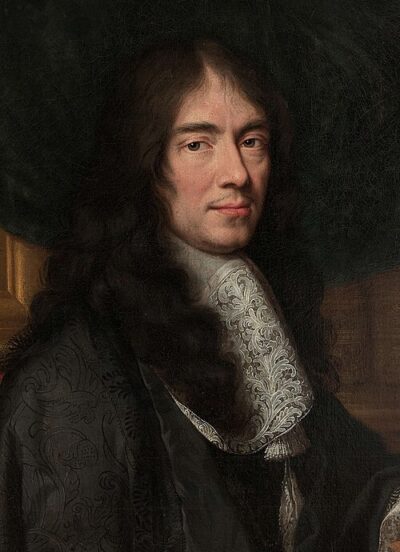
The Tales of my Mother Goose is a collection of fairy tales. It came out in 1697. It was written by Charles Perrault.
- Published
- 1697
- Came out
- 1695
- Written by
- Charles Perrault
- Genre
- tale
- Country of origin
- France
All 9 facts, and where they come from
Facts
9 facts · 0 confirmed by two sources · 0 cited · 9 from one source
Where this comes from
Papalocal keeps its own record. It started from these sources; what each one said is kept here as it was copied, so a change on their side never changes this page by itself. Tap one to read its version.
What Wikidata says · copied November 17, 2026 · revision 2519254294
- Described as
- collection of fairy tales
- Other names
- Tales of Mother Goose, Hiſtories, or Tales of Paſt Times, Tales of Paſt Times, The Tales of Mother Goose, Mother Goose’s Fairy Tales, Old‐Time Stories
- What it is
- literary cycle; literary work
- Written by
- Charles Perrault
- Genre
- tale · 1 reference
- Published
- 1697
- Language
- French
- Country of origin
- France · 1 reference; Kingdom of France
- Came out
- 1695
- Wikipedias with a page
- 24
Wikidata item Q5104112 (wikidata.org/wiki/Q5104112), public domain (CC0). Copied 2026-11-17.
What Wikipedia says · copied November 17, 2026 · revision 1384333276
Histoires ou contes du temps passé, avec des moralités (English: Stories or Tales from Past Times, with Morals), or Contes de ma mère l'Oye (English: Mother Goose Tales), is a collection of literary fairy tales written by Charles Perrault, published in Paris on 11 January 1697. The work became popular because it was written at a time when fairy tales were fashionable amongst aristocrats in Parisian literary salons. Perrault wrote the work when he retired from court as secretary to Jean-Baptiste Colbert, minister to King Louis XIV. Colbert's death may have forced Perrault's retirement, at which point he turned to writing. Scholars have debated as to the origin of his tales and whether they are original literary fairy tales modified from commonly known stories, or based on stories written by earlier medieval writers such as Boccaccio.
Elaborate embellishments were a preferred style at the French court. The simple plots Perrault started with were modified, the language enhanced, and rewritten for an audience of aristocratic and noble courtiers. Thematically, the stories support Perrault's belief that the nobility is superior to the peasant class, and many of the stories show an adherence to Catholic beliefs, such as those in which a woman undergoes purification from sin and repentance before reintegration into society.
From the Wikipedia article “Histoires ou contes du temps passé” (en.wikipedia.org/wiki/Histoires_ou_contes_du_temps_passé), by its contributors, under CC BY-SA 4.0 (creativecommons.org/licenses/by-sa/4.0/). Copied 2026-11-17; not changed.
Confirmed Two sources agree. Cited One source, and it names where it got it. One source One source, without a reference of its own. Sources disagree The sources disagree. We show the best-supported value and keep theirs below.
Picture: Unknown author, via Wikimedia Commons · Public domain