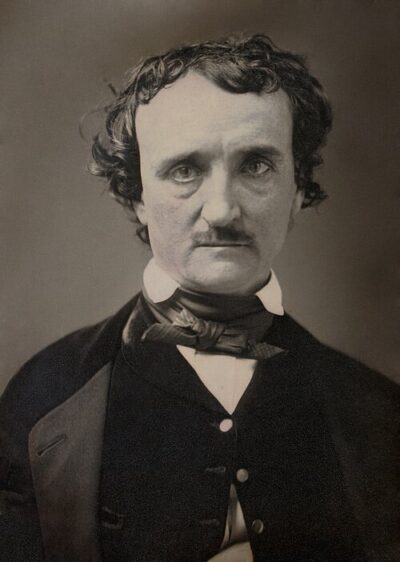
The Tell-Tale Heart
The Tell-Tale Heart is a short story by Edgar Allan Poe. It came out in 1843.
- Published
- January 1843
- Came out
- 1842
- Written by
- Edgar Allan Poe
- Genre
- horror fiction
- Country of origin
- United States
All 8 facts, and where they come from
Facts
8 facts · 0 confirmed by two sources · 2 cited · 6 from one source
Where this comes from
Papalocal keeps its own record. It started from these sources; what each one said is kept here as it was copied, so a change on their side never changes this page by itself. Tap one to read its version.
What Wikidata says · copied November 16, 2026 · revision 2513870277
- Described as
- short story by Edgar Allan Poe
- What it is
- literary work
- Written by
- Edgar Allan Poe · 1 reference
- Genre
- horror fiction; Gothic fiction
- Published
- January 1843 · 1 reference
- Language
- English
- Country of origin
- United States · 1 reference
- Came out
- 1842 · 1 reference
- Wikipedias with a page
- 49
Wikidata item Q762206 (wikidata.org/wiki/Q762206), public domain (CC0). Copied 2026-11-16.
What Wikipedia says · copied November 16, 2026 · revision 1385333822
"The Tell-Tale Heart" is a short story by American writer Edgar Allan Poe, first published in 1843. It is told by an unnamed narrator who endeavors to convince the reader of the narrator's sanity while simultaneously describing a murder the narrator committed. The victim was an old man with a filmy pale blue "vulture-eye", as the narrator calls it. The narrator emphasizes the careful calculation of the murder, attempting the perfect crime, complete with dismembering the body in the bathtub and hiding it under the floorboards. Ultimately, the narrator's actions result in hearing a thumping sound, which the narrator interprets as the dead man's beating heart.
The story was first published in James Russell Lowell's The Pioneer in January 1843. "The Tell-Tale Heart" is often considered a classic of the Gothic fiction genre and is one of Poe's best known short stories.
The specific motivation for murder, aside from the narrator's hatred of the old man's eye, the relationship between narrator and old man, the gender of the narrator, and other details are left unclear. The narrator denies having any feelings of hatred or resentment for the man who had, as stated, "never wronged" the narrator. The narrator also denies having killed for greed.
Critics have speculated that the old man could be a father figure, the narrator's landlord, or that the narrator works for the old man as a servant, and that perhaps his "vulture-eye" represents a veiled secret or power. The ambiguity and lack of details about the two main characters stand in contrast to the specific plot details leading up to the murder.
From the Wikipedia article “The Tell-Tale Heart” (en.wikipedia.org/wiki/The_Tell-Tale_Heart), by its contributors, under CC BY-SA 4.0 (creativecommons.org/licenses/by-sa/4.0/). Copied 2026-11-16; not changed.
Confirmed Two sources agree. Cited One source, and it names where it got it. One source One source, without a reference of its own. Sources disagree The sources disagree. We show the best-supported value and keep theirs below.
Picture: Wikimedia Commons: Tell tale heart in pioneer.jpg · See Commons file page