The Theory of the Leisure Class
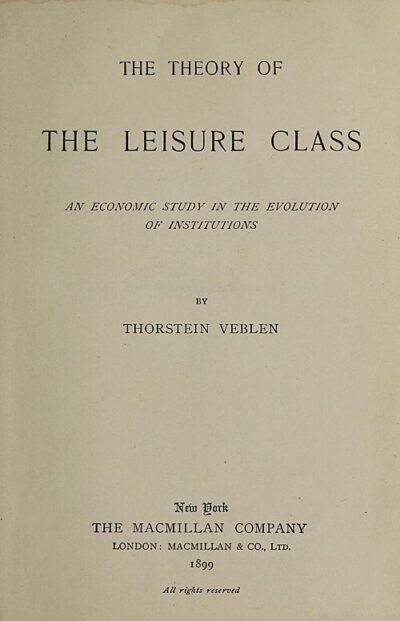
The Theory of the Leisure Class is a major book by Thorstein Veblen. It came out in 1899.
- Published
- 1899
- Written by
- Thorstein Veblen
- Genre
- academic writing
- Country of origin
- United States
All 7 facts, and where they come from
Facts
7 facts · 0 confirmed by two sources · 0 cited · 7 from one source
Where this comes from
Papalocal keeps its own record. It started from these sources; what each one said is kept here as it was copied, so a change on their side never changes this page by itself. Tap one to read its version.
What Wikidata says · copied November 16, 2026 · revision 2515899988
- Described as
- major book by Thorstein Veblen
- What it is
- written work
- Written by
- Thorstein Veblen
- Publisher
- Macmillan Inc.
- Genre
- academic writing
- Published
- 1899
- Language
- English
- Country of origin
- United States · 1 reference
- Wikipedias with a page
- 19
Wikidata item Q1265755 (wikidata.org/wiki/Q1265755), public domain (CC0). Copied 2026-11-16.
What Wikipedia says · copied November 16, 2026 · revision 1384229416
The Theory of the Leisure Class: An Economic Study of Institutions (1899), by Thorstein Veblen, is a treatise of economics and sociology, and a critique of conspicuous consumption as a function of social class and of consumerism, which are social activities derived from the social stratification of people and the division of labor; the social institutions of the feudal period (9th–15th c.) that have continued to the modern era.
Veblen discusses how the pursuit and the possession of wealth affects human behavior, that the contemporary lords of the manor, the businessmen who own the means of production, have employed themselves in the economically unproductive practices of conspicuous consumption and conspicuous leisure, which are useless activities that contribute neither to the economy nor to the material production of the useful goods and services required for the functioning of society. Instead, it is the middle class and working class who are usefully employed in the industrialised, productive occupations that support the whole of society.
From the Wikipedia article “The Theory of the Leisure Class” (en.wikipedia.org/wiki/The_Theory_of_the_Leisure_Class), by its contributors, under CC BY-SA 4.0 (creativecommons.org/licenses/by-sa/4.0/). Copied 2026-11-16; not changed.
Confirmed Two sources agree. Cited One source, and it names where it got it. One source One source, without a reference of its own. Sources disagree The sources disagree. We show the best-supported value and keep theirs below.
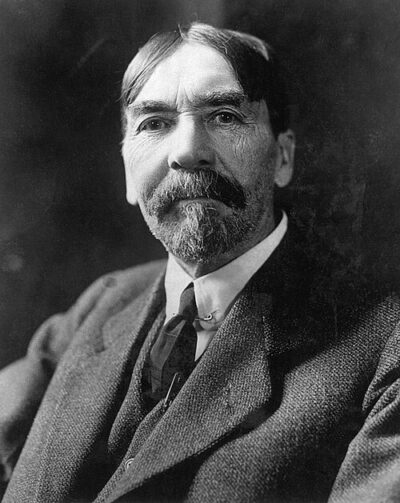
Picture: Unknown author, via Wikimedia Commons · Public domain