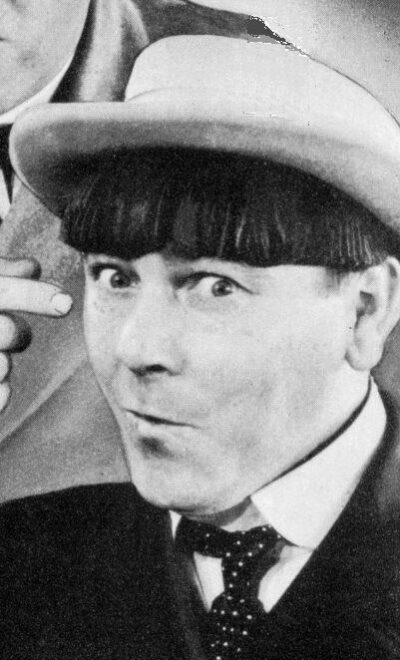
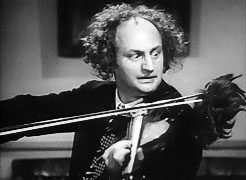
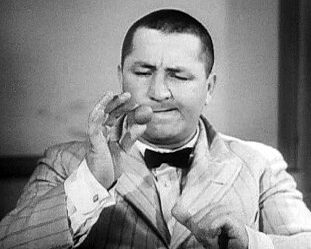
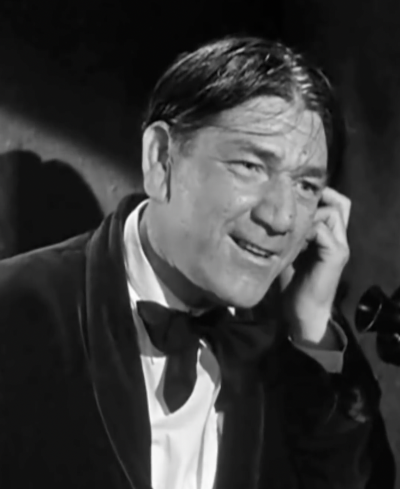
The Three Stooges
The Three Stooges is an American comedy team active from 1922 to 1970. It won the star on Hollywood Walk of Fame.
All 9 facts, and where they come from
Facts
9 facts · 0 confirmed by two sources · 0 cited · 9 from one source
Where this comes from
Papalocal keeps its own record. It started from these sources; what each one said is kept here as it was copied, so a change on their side never changes this page by itself. Tap one to read its version.
What Wikidata says · copied November 17, 2026 · revision 2546434249
- Described as
- American comedy team active from 1922 to 1970
- Other names
- 3 Stooges, Three Stooges, The 3 Stooges
- What it is
- comedy troupe; comedy trio; theatre comedy group
- Genre
- comedy film; physical comedy; family film; farce · 1 reference
- Awards
- star on Hollywood Walk of Fame · 1 reference
- Official website
- https://www.threestooges.com
- Wikipedias with a page
- 29
Wikidata item Q949161 (wikidata.org/wiki/Q949161), public domain (CC0). Copied 2026-11-17.
What Wikipedia says · copied November 17, 2026 · revision 1382711700
The Three Stooges were an American vaudeville and comedy troupe active from 1922 until 1970, best remembered for their 190 short-subject films by Columbia Pictures. Their hallmark styles were physical, farce, and slapstick comedy. Six Stooges appeared over the act's run, with only three working at any time. The two constants were Moe Howard and Larry Fine. The "third stooge" was played in turn by Shemp Howard, Curly Howard, Shemp again, Joe Besser, and "Curly Joe" DeRita.
The act began in 1922 as part of a vaudeville comedy act consisting originally of Ted Healy and Moe Howard. Over time, they were joined by Moe's brother, Shemp Howard, and then Larry Fine. The troupe became known as "Ted Healy and His Stooges" ("stooges" being a show-business term for on-stage assistants). The foursome appeared in one feature film, Soup to Nuts, before Shemp left to pursue a solo career. He was replaced by his and Moe's younger brother, Jerome "Curly" Howard, in 1932. Two years later, after appearing in several movies, the trio left Healy and signed on to appear in their own short-subject comedies for Columbia Pictures, now billed as "The Three Stooges". From 1934 to 1946, Moe, Larry, and Curly starred in more than 90 short comedies for Columbia.
Curly suffered a debilitating stroke in May 1946. Shemp returned, reconstituting the original lineup, until his death of a heart attack on November 22, 1955, three years and ten months after Curly's death of a cerebral hemorrhage. Film actor Joe Palma stood in (shot from behind to obscure his face) to complete four Shemp-era shorts under contract. The procedure of disguising one actor as another outside of stunt shots became known as the "fake Shemp". Columbia contract player Joe Besser joined as the third Stooge for two years (1956–1958), departing in 1958 to nurse his ill wife after Columbia terminated its shorts division. The studio then released all the shorts via Screen Gems, Columbia's television studio and distribution unit. Screen Gems then syndicated the shorts to television, whereupon the Stooges became one of the most popular comedy acts of the early 1960s.
Comic actor Joe DeRita became "Curly Joe" in 1958, replacing Besser for a new series of full-length theatrical films. With intense television exposure in the United States, the act regained momentum throughout the 1960s as popular kids' fare, until Larry's paralyzing stroke in the midst of filming a pilot for a Three Stooges TV series in January 1970. He died in January 1975 after a further series of strokes. Attempts were made in 1970 and 1975 to revive the act with longtime supporting actor Emil Sitka in Fine's role, but they were each cut short—the first by a movie deal falling through and Moe's wife persuading him to retire, the second by Moe's death.
From the Wikipedia article “The Three Stooges” (en.wikipedia.org/wiki/The_Three_Stooges), by its contributors, under CC BY-SA 4.0 (creativecommons.org/licenses/by-sa/4.0/). Copied 2026-11-17; not changed.
Confirmed Two sources agree. Cited One source, and it names where it got it. One source One source, without a reference of its own. Sources disagree The sources disagree. We show the best-supported value and keep theirs below.
Picture: Wikimedia Commons: The Three Stooges 1936 (cropped).jpg · See Commons file page