The Turkish Bath
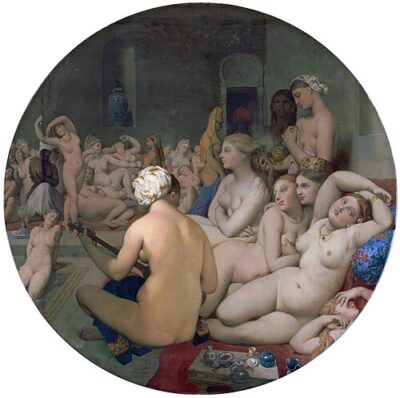
The Turkish Bath is a painting by Jean-Auguste-Dominique Ingres in the Louvre. It came out in 1862. It is based on The Valpinçon Bather.
- Came out
- 1862
- Created by
- Jean-Auguste-Dominique Ingres
- Genre
- nude
All 8 facts, and where they come from
Facts
8 facts · 0 confirmed by two sources · 2 cited · 6 from one source
Where this comes from
Papalocal keeps its own record. It started from these sources; what each one said is kept here as it was copied, so a change on their side never changes this page by itself. Tap one to read its version.
What Wikidata says · copied November 17, 2026 · revision 2568751889
- Described as
- painting by Jean-Auguste-Dominique Ingres in the Louvre
- What it is
- painting; tondo
- Created by
- Jean-Auguste-Dominique Ingres · 1 reference
- Genre
- nude; genre art
- Based on
- The Valpinçon Bather
- Came out
- 1862 · 1 reference
- Owned by
- French State · 1 reference
- Wikipedias with a page
- 27
Wikidata item Q2027662 (wikidata.org/wiki/Q2027662), public domain (CC0). Copied 2026-11-17.
What Wikipedia says · copied November 17, 2026 · revision 1368309684
The Turkish Bath (Le Bain turc) is an oil painting by Jean-Auguste-Dominique Ingres, initially completed between 1852 and 1859, but modified in 1862. The painting depicts a group of nude women at a pool in a harem. It has an erotic style that evokes both the Near East and earlier western styles associated with mythological subject matter. The painting expands on a number of motifs that Ingres had explored in earlier paintings, in particular The Valpinçon Bather (1808) and La Grande odalisque (1814) and is an example of Romanticism.
The work is signed and dated 1862, when Ingres was around 82 years old. He altered the original rectangular format and changed the painting to a tondo. A photograph of its original state, taken by Charles Marville, survives.
From the Wikipedia article “The Turkish Bath” (en.wikipedia.org/wiki/The_Turkish_Bath), by its contributors, under CC BY-SA 4.0 (creativecommons.org/licenses/by-sa/4.0/). Copied 2026-11-17; not changed.
Confirmed Two sources agree. Cited One source, and it names where it got it. One source One source, without a reference of its own. Sources disagree The sources disagree. We show the best-supported value and keep theirs below.
Picture: Jean-Auguste-Dominique Ingres, via Wikimedia Commons · Public domain