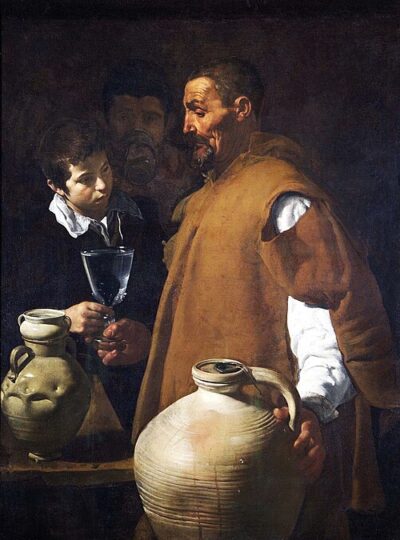
The Waterseller of Seville
The Waterseller of Seville is a painting by Diego Velázquez. It came out in 1620.
- Came out
- 1620
- Created by
- Diego Velázquez
- Genre
- genre art
All 6 facts, and where they come from
Facts
6 facts · 0 confirmed by two sources · 5 cited · 1 from one source
Where this comes from
Papalocal keeps its own record. It started from these sources; what each one said is kept here as it was copied, so a change on their side never changes this page by itself. Tap one to read its version.
What Wikidata says · copied November 17, 2026 · revision 2569880556
- Described as
- painting by Diego Velázquez
- Other names
- The Water Seller of Seville
- What it is
- painting · 1 reference
- Created by
- Diego Velázquez · 2 references
- Genre
- genre art · 1 reference; still life · 1 reference
- Came out
- 1620 · 1 reference
- Country
- United Kingdom · 1 reference
- Wikipedias with a page
- 19
Wikidata item Q2627810 (wikidata.org/wiki/Q2627810), public domain (CC0). Copied 2026-11-17.
What Wikipedia says · copied November 17, 2026 · revision 1367378780
The Waterseller of Seville is the title of three paintings by Spanish artist Diego Velázquez, dating from 1618–1622. The original version is considered to be among the finest works of the painter's Seville period and is displayed in the Wellington Collection of Apsley House. The original version was painted by Velázquez when he was in his late teens or early twenties. Looking at this painting, there is an older man, a young boy, and a bystander in the background. The old man is handing the young boy a glass of water, but they never look at each other, nor do they make eye contact with the viewer.
From the Wikipedia article “The Waterseller of Seville” (en.wikipedia.org/wiki/The_Waterseller_of_Seville), by its contributors, under CC BY-SA 4.0 (creativecommons.org/licenses/by-sa/4.0/). Copied 2026-11-17; not changed.
Confirmed Two sources agree. Cited One source, and it names where it got it. One source One source, without a reference of its own. Sources disagree The sources disagree. We show the best-supported value and keep theirs below.
Picture: Diego Velázquez, via Wikimedia Commons · Public domain