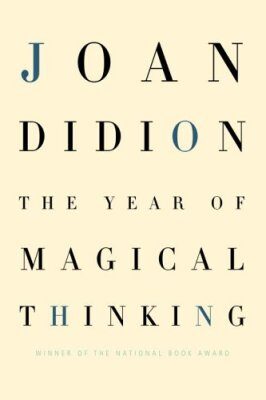
The Year of Magical Thinking
The Year of Magical Thinking is a 2005 memoir by Joan Didion. It won the Prix Médicis essai and 1 more.
- Published
- 2005
- Written by
- Joan Didion
- Genre
- memoir
- Country of origin
- United States
All 8 facts, and where they come from
Facts
8 facts · 0 confirmed by two sources · 2 cited · 6 from one source
Where this comes from
Papalocal keeps its own record. It started from these sources; what each one said is kept here as it was copied, so a change on their side never changes this page by itself. Tap one to read its version.
What Wikidata says · copied November 16, 2026 · revision 2555872600
- Described as
- 2005 memoir by Joan Didion
- What it is
- written work
- Written by
- Joan Didion
- Genre
- memoir
- Published
- 2005 · 1 reference
- Language
- English
- Country of origin
- United States · 1 reference
- Awards
- Prix Médicis essai (2007); National Book Award for Nonfiction (2005) · 1 reference
- Wikipedias with a page
- 8
Wikidata item Q993664 (wikidata.org/wiki/Q993664), public domain (CC0). Copied 2026-11-16.
What Wikipedia says · copied November 16, 2026 · revision 1385945626
The Year of Magical Thinking is a memoir by Joan Didion, accounting of the year following the death of her husband John Gregory Dunne in 2003. Published by Knopf in October 2005, The Year of Magical Thinking was immediately acclaimed as a classic book about mourning. It won the 2005 National Book Award for Nonfiction and was a finalist for both the National Book Critics Circle Award and the Pulitzer Prize for Biography or Autobiography. In 2024, The New York Times Book Review ranked The Year of Magical Thinking as the 12th best book of the 21st century. It was adapted into a play in 2007.
From the Wikipedia article “The Year of Magical Thinking” (en.wikipedia.org/wiki/The_Year_of_Magical_Thinking), by its contributors, under CC BY-SA 4.0 (creativecommons.org/licenses/by-sa/4.0/). Copied 2026-11-16; not changed.
Confirmed Two sources agree. Cited One source, and it names where it got it. One source One source, without a reference of its own. Sources disagree The sources disagree. We show the best-supported value and keep theirs below.
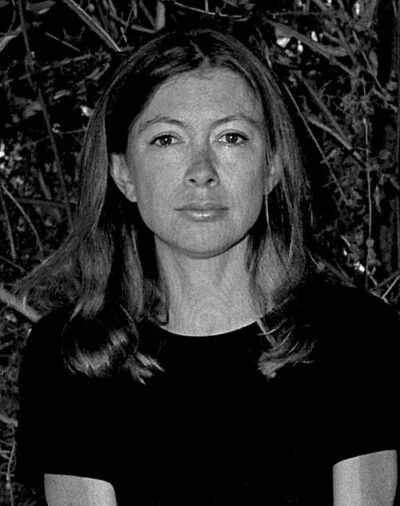
Picture: Joan Didion, via Wikimedia Commons · Public domain