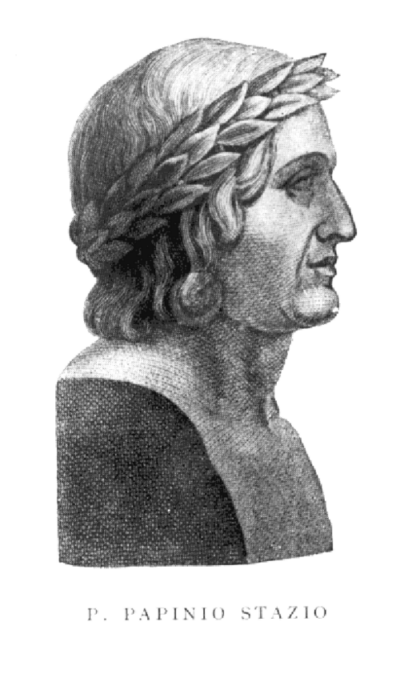
Thebaid
Thebaid is an epic poem by Statius. It was written by Publius Papinius Statius.
- Written by
- Publius Papinius Statius
- Genre
- epic poem
- Country of origin
- Roman Empire
All 6 facts, and where they come from
Facts
6 facts · 0 confirmed by two sources · 1 cited · 5 from one source
Where this comes from
Papalocal keeps its own record. It started from these sources; what each one said is kept here as it was copied, so a change on their side never changes this page by itself. Tap one to read its version.
What Wikidata says · copied November 17, 2026 · revision 2562876111
- Described as
- epic poem by Statius
- Other names
- Stat. Theb.
- What it is
- literary work
- Written by
- Publius Papinius Statius
- Genre
- epic poem
- Language
- Classical Latin · 1 reference
- Country of origin
- Roman Empire
- Followed by
- Silvae · 1 reference
- Wikipedias with a page
- 23
Wikidata item Q2708117 (wikidata.org/wiki/Q2708117), public domain (CC0). Copied 2026-11-17.
What Wikipedia says · copied November 17, 2026 · revision 1384740898
The Thebaid (; Latin: Thēbaïs, lit. 'Song of Thebes') is a Latin epic poem written by the Roman poet Statius. Published in the early 90s AD, it contains 9,748 lines arranged in 12 books, and recounts the clash of two brothers, Eteocles and Polynices, over the throne of the Greek city of Thebes. After Polynices is sent into exile, he forges an alliance of seven Greek princes and embarks on a military campaign against his brother.
Although its source material derives predominantly from the Greek literary tradition, the Thebaid has close ties with other Latin texts such as Virgil's Aeneid and the tragedies of Seneca the Younger. The poem's central themes include the relationship between politics and the family, civil war, and the amoral acts to which it gives rise. Critics have also noted the poem's innovative depiction of Roman mythology. Following in the footsteps of Ovid's Metamorphoses, Statius used an episodic structure which is held together by subtle links between individual episodes.
The Thebaid was not widely read in antiquity, but was held in high esteem throughout the Middle Ages, when multiple adaptions of the poem were composed in vernacular languages. Preserved through the Carolingian Renaissance, the text of the Thebaid reached modernity without the recognition it once held. While classical scholars of the 19th and early 20th century criticised the poem for a perceived lack of originality and taste, a resurgence of critical interest has since brought it closer to the centre of the literary canon.
From the Wikipedia article “Thebaid (Statius)” (en.wikipedia.org/wiki/Thebaid_(Statius)), by its contributors, under CC BY-SA 4.0 (creativecommons.org/licenses/by-sa/4.0/). Copied 2026-11-17; not changed.
Confirmed Two sources agree. Cited One source, and it names where it got it. One source One source, without a reference of its own. Sources disagree The sources disagree. We show the best-supported value and keep theirs below.
Picture: Wikimedia Commons: Stazio, tebaide, xiv secolo, copiato da tedaldo della casa (bncf II.II.78).jpg · See Commons file page