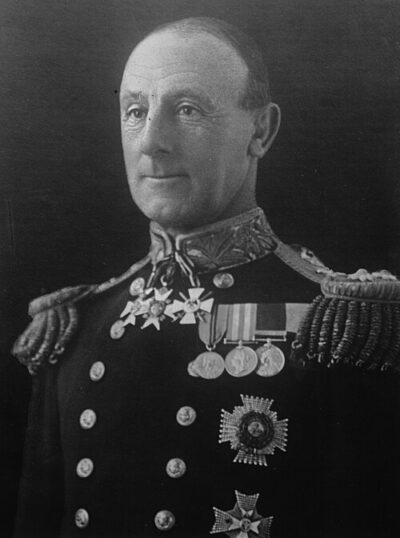
Third Sea Lord
Third Sea Lord is a British naval officer. It was created in 1832.
- Created
- 1832
All 2 facts, and where they come from
Facts
2 facts · 0 confirmed by two sources · 0 cited · 2 from one source
Where this comes from
Papalocal keeps its own record. It started from these sources; what each one said is kept here as it was copied, so a change on their side never changes this page by itself. Tap one to read its version.
What Wikidata says · copied November 17, 2026 · revision 2515846347
- Described as
- British naval officer
- Other names
- Third Naval Lord, Third Naval Lord and Controller of the Navy, Controller of the Navy, Third Sea Lord and Controller of the Navy, Controller of the Royal Navy
- What it is
- military rank
- Created
- 1832 · 1 reference
- Wikipedias with a page
- 3
Wikidata item Q3984931 (wikidata.org/wiki/Q3984931), public domain (CC0). Copied 2026-11-17.
What Wikipedia says · copied November 17, 2026 · revision 1381224166
The post of Controller of the Navy (abbreviated as CofN) was originally created in 1859 when the Surveyor of the Navy's title changed to Controller of the Navy. In 1869 the controller's office was abolished and its duties were assumed by that of the Third Naval Lord whose title then changed to Third Naval Lord and Controller of the Navy. In 1904 the title was changed again to Third Sea Lord and Controller of the Navy. In 1965, the words Third Sea Lord were removed, and the title became simply Controller of the Navy. The post-holder is responsible for procurement and matériel in the British Royal Navy.
Originally the post-holder was a member of the Board of Admiralty and later a member of the Admiralty Board.
From the Wikipedia article “Controller of the Navy (Royal Navy)” (en.wikipedia.org/wiki/Controller_of_the_Navy_(Royal_Navy)), by its contributors, under CC BY-SA 4.0 (creativecommons.org/licenses/by-sa/4.0/). Copied 2026-11-17; not changed.
Confirmed Two sources agree. Cited One source, and it names where it got it. One source One source, without a reference of its own. Sources disagree The sources disagree. We show the best-supported value and keep theirs below.