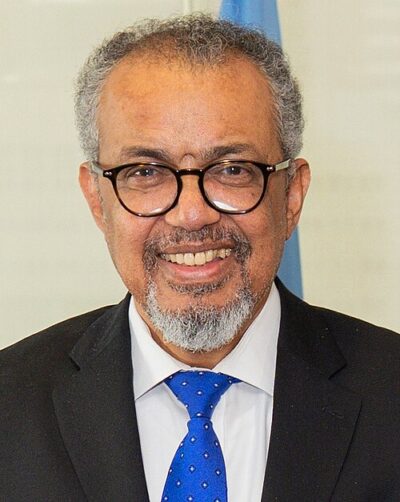
Tigray People's Liberation Front
The Tigray People's Liberation Front is a Tigrayan nationalist political party in Ethiopia. It was founded in 1975. Its headquarters are in Mekele. It stands for ethnic nationalism.
- Country
- Ethiopia
- Founded
- February 18, 1975
- Ideology
- ethnic nationalism
- Chair
- Debretsion Gebremichael
All 8 facts, and where they come from
Facts
8 facts · 0 confirmed by two sources · 1 cited · 7 from one source
Where this comes from
Papalocal keeps its own record. It started from these sources; what each one said is kept here as it was copied, so a change on their side never changes this page by itself. Tap one to read its version.
What Wikidata says · copied November 17, 2026 · revision 2554206601
- Described as
- Tigrayan nationalist political party in Ethiopia
- Other names
- TPLF, Tigrai People's Liberation Front, Tigrean People's Liberation Front, Tigre People's Liberation Front, Tigrayan People's Liberation Front
- What it is
- political party; terrorist group · 2 references
- Founded
- February 18, 1975
- Headquarters
- Mekele
- Country
- Ethiopia
- Chair
- Debretsion Gebremichael; Meles Zenawi · 1 reference
- Ideology
- ethnic nationalism
- Wikipedias with a page
- 31
Wikidata item Q1699287 (wikidata.org/wiki/Q1699287), public domain (CC0). Copied 2026-11-17.
What Wikipedia says · copied November 17, 2026 · revision 1385150544
The Tigray People's Liberation Front (TPLF; Tigrinya: ሕዝባዊ ወያነ ሓርነት ትግራይ, romanized: Həzbawi Wäyyanä Ḥarənnät Təgray, lit. 'Popular Struggle for the Freedom of Tigray'), also referred as the Tigrayan People's Liberation Front, is a left-wing ethnic nationalist, paramilitary group, and a former ruling party of Ethiopia. It was classified as a terrorist organization by the Ethiopian government during the Tigray War until its removal from the list in 2023. The organization is colloquially known as Woyane (Tigrinya: ወያነ, lit. 'Revolutionary') or Weyané (Amharic: ወያኔ).
The TPLF was founded in February 1975, in Dedebit, Tigray. It grew to become the most powerful armed liberation movement in Ethiopia during the Ethiopian Civil War. Unlike the Eritrean or ethnic Somali separatists based in Ethiopia at the time, the TPLF did not seek independence from the Ethiopian state; instead, it aimed to overthrow the central government and implement its own version of the Ethiopian revolution. From 1988 to 2018, it led a political coalition, the Ethiopian People's Revolutionary Democratic Front (EPRDF). After fighting for over a decade, the TPLF, with the military support of the Eritrean People's Liberation Front (EPLF), overthrew the ruling People's Democratic Republic of Ethiopia (PDRE) on 28 May 1991, and installed a new government that remained in power for 27 years.
The new ruling EPRDF government, was dominated by the TPLF, who gradually consolidated control over Ethiopia's federal administrations, the ENDF, and key economic resources such as foreign aid, loans, and land leases, amassing billions. The TPLF's restructuring of Ethiopia into an ethnic federal state further fueled civil conflicts in the ensuing decades.
The TPLF lost control of the Ethiopian federal government in 2018. During the Tigray War that began in 2020, the National Election Board of Ethiopia terminated the party's legal status. In 2021, the Ethiopian parliament designated the TPLF as a terrorist organization. On 2 November 2022, the African Union brokered a deal in Pretoria, South Africa, between the federal government and the TPLF to end the Tigray War. As per the peace agreement, the TPLF began disarming in January 2023.
Following the Pretoria peace agreement in 2022, the TPLF began experiencing severe internal divisions. This has seen the rise of a hardline faction within the front. Fighting resumed in September 2026 when the TPLF initiated an offensive against the Ethiopian government.
From the Wikipedia article “Tigray People's Liberation Front” (en.wikipedia.org/wiki/Tigray_People's_Liberation_Front), by its contributors, under CC BY-SA 4.0 (creativecommons.org/licenses/by-sa/4.0/). Copied 2026-11-17; not changed.
Confirmed Two sources agree. Cited One source, and it names where it got it. One source One source, without a reference of its own. Sources disagree The sources disagree. We show the best-supported value and keep theirs below.
Picture: Wikimedia Commons: Debretsion Gebremichael at a press conference.jpg · See Commons file page