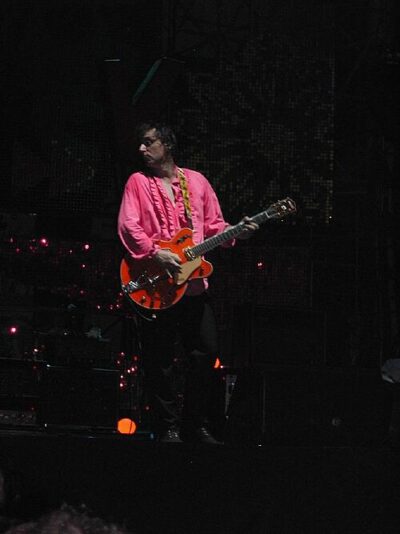
Tired Pony
Tired Pony is a country rock band. It was founded in 2009.
- Founded
- 2009
- Genre
- alternative rock
- Record label
- Fiction Records
- Country of origin
- United States
All 7 facts, and where they come from
Facts
7 facts · 0 confirmed by two sources · 0 cited · 7 from one source
Where this comes from
Papalocal keeps its own record. It started from these sources; what each one said is kept here as it was copied, so a change on their side never changes this page by itself. Tap one to read its version.
What Wikidata says · copied November 17, 2026 · revision 2550142524
- Described as
- country rock band
- What it is
- musical group
- Genre
- alternative rock; country rock
- Country of origin
- United States
- Record label
- Fiction Records
- Founded
- 2009
- Official website
- http://www.tiredpony.com/
- Wikipedias with a page
- 1
Wikidata item Q7809183 (wikidata.org/wiki/Q7809183), public domain (CC0). Copied 2026-11-17.
What Wikipedia says · copied November 17, 2026 · revision 1361469078
Tired Pony was an indie folk supergroup consisting of Gary Lightbody, Richard Colburn, Iain Archer, Jacknife Lee, Peter Buck, Scott McCaughey, Tom Smith and Troy Stewart. Lightbody formed the group out of his appreciation for country music, and has during the early planning phase described the group's music once as "country-tinged" but explained later that in the end the album's development turned out much more Americana than country during the whole creative process in the studio. The group visited Portland, Oregon in January 2010 to record this debut album, which was produced by member Lee; The Place We Ran From was released on 12 July 2010. Tired Pony began recording their second album The Ghost of the Mountain on 19 February 2013, which was released on 19 August 2013.
From the Wikipedia article “Tired Pony” (en.wikipedia.org/wiki/Tired_Pony), by its contributors, under CC BY-SA 4.0 (creativecommons.org/licenses/by-sa/4.0/). Copied 2026-11-17; not changed.
Confirmed Two sources agree. Cited One source, and it names where it got it. One source One source, without a reference of its own. Sources disagree The sources disagree. We show the best-supported value and keep theirs below.