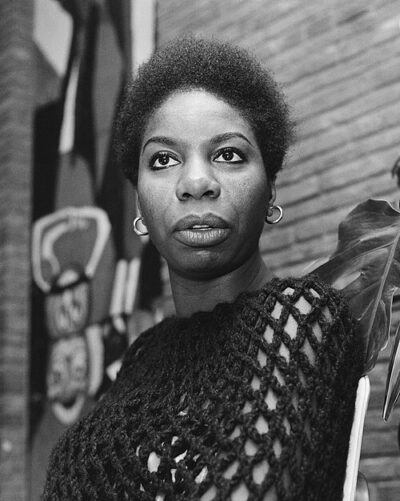
To Be Young, Gifted and Black
To Be Young, Gifted and Black is a 1970 song performed by Nina Simone.
- Released
- 1970
- Performed by
- Nina Simone
- Genre
- protest song
All 6 facts, and where they come from
Facts
6 facts · 0 confirmed by two sources · 0 cited · 6 from one source
Where this comes from
Papalocal keeps its own record. It started from these sources; what each one said is kept here as it was copied, so a change on their side never changes this page by itself. Tap one to read its version.
What Wikidata says · copied November 16, 2026 · revision 2563735218
- Described as
- 1970 song performed by Nina Simone
- What it is
- musical work/composition
- Performed by
- Nina Simone
- Genre
- protest song
- Released
- 1970 · 1 reference
- Language
- English
- Record label
- RCA Records
- Wikipedias with a page
- 6
Wikidata item Q7810855 (wikidata.org/wiki/Q7810855), public domain (CC0). Copied 2026-11-16.
What Wikipedia says · copied November 16, 2026 · revision 1377166789
"To Be Young, Gifted and Black" is a song by Nina Simone with lyrics by Weldon Irvine. Simone introduced the song on August 17, 1969, to a crowd of 50,000 at the Harlem Cultural Festival, captured on broadcast video tape and released in 2021 as the documentary film Summer of Soul. Two months later, she recorded the song as part of her concert at Philharmonic Hall, a performance that resulted in her live album Black Gold (1970). Released as a single, it peaked at number 8 on the R&B chart and number 76 on the Hot 100 in January 1970. A cover version by Jamaican duo Bob and Marcia reached number 5 on the UK Singles Chart in 1970.
The title of the song comes from Lorraine Hansberry's autobiographical play To Be Young, Gifted and Black. The song is considered an anthem of the Black Pride movement.
From the Wikipedia article “To Be Young, Gifted and Black” (en.wikipedia.org/wiki/To_Be_Young,_Gifted_and_Black), by its contributors, under CC BY-SA 4.0 (creativecommons.org/licenses/by-sa/4.0/). Copied 2026-11-16; not changed.
Confirmed Two sources agree. Cited One source, and it names where it got it. One source One source, without a reference of its own. Sources disagree The sources disagree. We show the best-supported value and keep theirs below.