
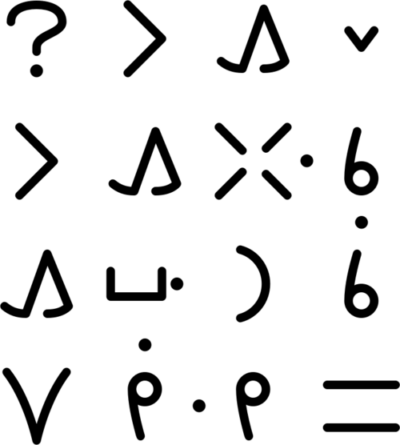
Toki Pona
Toki Pona is a minimalist language created by Sonja Lang. It came out in 2001.
- Released
- August 8, 2001
- Created by
- Sonja Lang
All 6 facts, and where they come from
Facts
6 facts · 0 confirmed by two sources · 1 cited · 5 from one source
Where this comes from
Papalocal keeps its own record. It started from these sources; what each one said is kept here as it was copied, so a change on their side never changes this page by itself. Tap one to read its version.
What Wikidata says · copied November 17, 2026 · revision 2559174213
- Described as
- minimalist language created by Sonja Lang
- Other names
- Tokipona, the language of good, toki pona, tok
- What it is
- a posteriori language; engineered language; philosophical language
- Created by
- Sonja Lang
- Released
- August 8, 2001 · 1 reference
- Official website
- https://tokipona.net
- Wikipedias with a page
- 106
Wikidata item Q36846 (wikidata.org/wiki/Q36846), public domain (CC0). Copied 2026-11-17.
What Wikipedia says · copied November 17, 2026 · revision 1384687101
Toki Pona (; toki pona, pronounced [ˈto.ki ˈpo.na] , lit. 'the language of good') is a philosophical and artistic constructed language designed for its small vocabulary, simplicity, and ease of acquisition. It was created by Canadian translator and polyglot Sonja Lang with the stated purpose of simplifying her thoughts and communication. The first drafts were published online in 2001, while the complete form was published in the 2014 book Toki Pona: The Language of Good (referred to as lipu pu in Toki Pona). Lang also released the Toki Pona Dictionary (lipu ku) in July 2021, describing the language as used by its community of speakers. In 2024, a third book was released, a Toki Pona adaptation of The Wonderful Wizard of Oz, written in Sitelen Pona.
Toki Pona is an isolating language with only 14 phonemes and an underlying feature of minimalism. It focuses on simple, near-universal concepts to maximize expression from very few words. In Toki Pona: The Language of Good, Lang presents around 120 words, while the later Toki Pona Dictionary lists 137 "essential" words and a small number of less-used ones. Its words are easy to pronounce across language backgrounds, which allows it to serve as a bridge for people of different cultures. However, it was not created as an international auxiliary language. Partly inspired by Taoist philosophy, the language is designed to help users concentrate on basic things and to promote positive thinking, in accordance with the Sapir–Whorf hypothesis. Despite the small vocabulary, speakers can understand and communicate, mainly relying on context, combinations of words, and expository sentences to express more specific meanings.
After its initial creation, a small community of speakers developed in the early 2000s. While activity mainly takes place online in chat rooms, on social media, and in other online groups, there have been a few organized in-person meetups.
From the Wikipedia article “Toki Pona” (en.wikipedia.org/wiki/Toki_Pona), by its contributors, under CC BY-SA 4.0 (creativecommons.org/licenses/by-sa/4.0/). Copied 2026-11-17; not changed.
Confirmed Two sources agree. Cited One source, and it names where it got it. One source One source, without a reference of its own. Sources disagree The sources disagree. We show the best-supported value and keep theirs below.
Picture: kulupu pi lipu tenpo, via Wikimedia Commons · CC BY-SA 4.0
