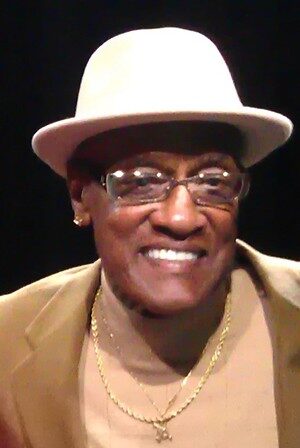
Total Experience Records
Total Experience Records is an American record label. It was founded in 1977 by Lonnie Simmons. Its headquarters are in Beverly Hills.
- Founded
- 1977
- Founded by
- Lonnie Simmons
- Headquarters
- Beverly Hills
- Country
- United States
All 7 facts, and where they come from
Facts
7 facts · 0 confirmed by two sources · 0 cited · 6 from one source · 1 where the sources disagree
What’s different
- Founded: we show 1977 (Sources disagree). Wikidata also lists 1981
Where this comes from
Papalocal keeps its own record. It started from these sources; what each one said is kept here as it was copied, so a change on their side never changes this page by itself. Tap one to read its version.
What Wikidata says · copied November 17, 2026 · revision 1706575705
- Described as
- American record label
- What it is
- record label
- Genre
- funk; rhythm and blues
- Founded
- 1977; 1981
- Founded by
- Lonnie Simmons
- Headquarters
- Beverly Hills
- Country
- United States · 1 reference
- Wikipedias with a page
- 2
Wikidata item Q7828018 (wikidata.org/wiki/Q7828018), public domain (CC0). Copied 2026-11-17.
What Wikipedia says · copied November 17, 2026 · revision 1355547207
Total Experience Records was a record label founded by Lonnie Simmons. Its two major acts were The Gap Band and Yarbrough & Peoples. It originally began in 1975 as a production company with the first release being a 45 with the Semper led group New Experience on Ariola Records. By the fall of 1978, the production company signed a label deal with Mercury Records, before Simmons decided to transform the production company into a label in 1981. From its inception in 1981 to late 1983, Total Experience was a subsidiary label of Mercury's parent company, PolyGram. In 1984, the label became independent, changing its distribution from PolyGram to RCA Records.
From the Wikipedia article “Total Experience Records” (en.wikipedia.org/wiki/Total_Experience_Records), by its contributors, under CC BY-SA 4.0 (creativecommons.org/licenses/by-sa/4.0/). Copied 2026-11-17; not changed.
Confirmed Two sources agree. Cited One source, and it names where it got it. One source One source, without a reference of its own. Sources disagree The sources disagree. We show the best-supported value and keep theirs below.