Treaty of Brest-Litovsk
Treaty of Brest-Litovsk is a peace treaty between the Soviet Russia and the Central Powers (3 March 1918).
- Released
- 1918
All 5 facts, and where they come from
Facts
5 facts · 0 confirmed by two sources · 0 cited · 5 from one source
Where this comes from
Papalocal keeps its own record. It started from these sources; what each one said is kept here as it was copied, so a change on their side never changes this page by itself. Tap one to read its version.
What Wikidata says · copied November 17, 2026 · revision 2567935105
- Described as
- peace treaty between the Soviet Russia and the Central Powers (3 March 1918)
- Other names
- Brest-Litovsk Treaty, Brest Litovsk
- What it is
- peace treaty; separate peace
- Released
- 1918
- Language
- Bulgarian; Russian
- Wikipedias with a page
- 70
Wikidata item Q122371 (wikidata.org/wiki/Q122371), public domain (CC0). Copied 2026-11-17.
What Wikipedia says · copied November 17, 2026 · revision 1384052152
The Treaty of Brest-Litovsk was a separate peace treaty signed on 3 March 1918 between Russia and the Central Powers (Germany, Austria-Hungary, the Ottoman Empire, and Bulgaria), by which Russia withdrew from World War I. The treaty, which followed months of negotiations after the armistice on the Eastern Front in December 1917, was signed at Brest-Litovsk (now Brest, Belarus).
The Soviet delegation was initially headed by Adolph Joffe, and key figures from the Central Powers included Max Hoffmann and Richard von Kühlmann of Germany, Ottokar Czernin of Austria-Hungary, and Talaat Pasha of the Ottoman Empire. In January 1918, the Central Powers demanded secession of all occupied territories of the former Russian Empire. The Soviets sent a new peace delegation led by Leon Trotsky, which aimed to stall the negotiations while awaiting revolutions in Central Europe. A renewed Central Powers offensive launched on February 18 captured large territories in the Baltic region, Belarus, and Ukraine and forced the Soviet side to sue for peace.
Under the terms of the treaty, Russia lost control of Ukraine, Poland, Belarus, Lithuania, Latvia, Estonia, and its Caucasian province of Kars and Batum. The lands comprised 34% of the former empire's population, 54% of its industrial land, 89% of its coalfields, and 26% of its railways. The historian Stephen Kotkin wrote that "no Russian government had ever surrendered so much territory or sovereignty". The Soviet government also confirmed the independence of Finland, which it had recognized in January 1918, and pledged to end its war with the Ukrainian People's Republic, which the Central Powers had recognized under the prior Treaty of Brest-Litovsk (9 February 1918). A supplementary protocol signed in August 1918 required Russia to pay Germany war reparations of six billion marks. The treaty was controversial in Russia, giving a unifying cause to the White movement and opening a rift between the Bolsheviks and the Left Socialist-Revolutionaries, whose representatives withdrew from the Council of People's Commissars after its signing and later rebelled in the Left SR Uprising.
The treaty was annulled by the Armistice of 11 November 1918, in which Germany surrendered to the western Allied Powers. Subsequent attempts by the Soviets to restore power in the lost territories during the Russian Civil War (1917–1922) had mixed results, with the Red Army losing the three Baltic countries but regaining Azerbaijan, Armenia, Belarus, Georgia, and Ukraine by 1921. The border with Turkey established by the treaty was largely affirmed by the Treaty of Kars (1921). Under the Treaty of Rapallo (1922), Russia and Germany renounced all territorial and financial claims against each other.
From the Wikipedia article “Treaty of Brest-Litovsk” (en.wikipedia.org/wiki/Treaty_of_Brest-Litovsk), by its contributors, under CC BY-SA 4.0 (creativecommons.org/licenses/by-sa/4.0/). Copied 2026-11-17; not changed.
Confirmed Two sources agree. Cited One source, and it names where it got it. One source One source, without a reference of its own. Sources disagree The sources disagree. We show the best-supported value and keep theirs below.
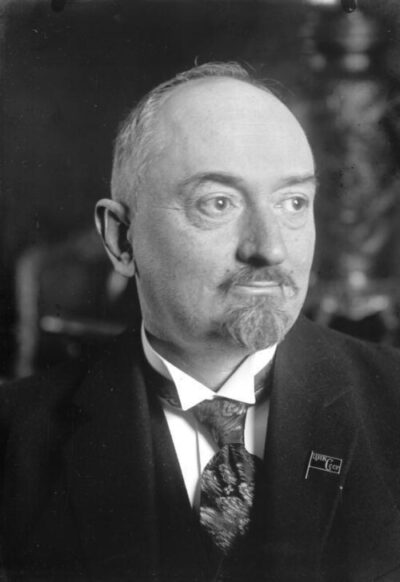
Picture: Wikimedia Commons: Traktat brzeski 1918.jpg · See Commons file page