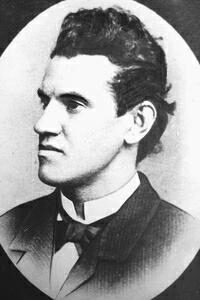
Trei culori
Trei culori is a Romanian national anthem (1977-1990). It came out in 1880.
- Released
- 1880
- Country of origin
- Romania
All 8 facts, and where they come from
Facts
8 facts · 0 confirmed by two sources · 0 cited · 8 from one source
Where this comes from
Papalocal keeps its own record. It started from these sources; what each one said is kept here as it was copied, so a change on their side never changes this page by itself. Tap one to read its version.
What Wikidata says · copied November 18, 2026 · revision 2569300004
- Described as
- Romanian national anthem (1977-1990)
- What it is
- national anthem (1977–1990); musical work/composition
- Music by
- Ciprian Porumbescu
- Released
- 1880
- Language
- Romanian
- Country of origin
- Romania · 1 reference
- Country
- Romania
- Office of
- Socialist Republic of Romania
- Wikipedias with a page
- 21
Wikidata item Q852029 (wikidata.org/wiki/Q852029), public domain (CC0). Copied 2026-11-18.
What Wikipedia says · copied November 18, 2026 · revision 1384624427
"Three Colors" was the national anthem of the Socialist Republic of Romania from 1977 to 1990. On 24 January 1990, after the Romanian Revolution, it was officially replaced by the current anthem „Deșteaptă-te, române!”. Before 1977, the country's national anthem was „E scris pe tricolor Unire”, whose melody is the same as that of the Albanian national anthem.
The song "Three Colors" is based on a Romanian patriotic song written and composed by Ciprian Porumbescu. The original lyrics twice underwent non-credited revisions in order to reflect the country's Communist doctrine, and parallels between past and present glories. This was unlike one of the previous anthems, „Te slăvim, Românie“, a text mentioning Romania's brotherhood with the Soviet Union, and praises of the Leninist ideology were consciously not included, emphasising a more national communist character of the state.
The title refers to the national flag of Romania, which is a blue-yellow-red tricolor. It has not undergone major changes. Only the distribution of the colors (in point of proportion and position) was changed to a certain extent, being made equal after the abortive Romanian revolution of 1848. The Romanian principalities were among the many European states during that time that were inspired by the French Revolutionary spirit to make a dimensionally standardized tricolour banner as their national flag.
The song continued to be used as Romania's national anthem for around a month after the overthrow of the Socialist Republic, but with Porumbescu's original patriotic lyrics.
From the Wikipedia article “Trei culori” (en.wikipedia.org/wiki/Trei_culori), by its contributors, under CC BY-SA 4.0 (creativecommons.org/licenses/by-sa/4.0/). Copied 2026-11-18; not changed.
Confirmed Two sources agree. Cited One source, and it names where it got it. One source One source, without a reference of its own. Sources disagree The sources disagree. We show the best-supported value and keep theirs below.