Très Riches Heures du duc de Berry
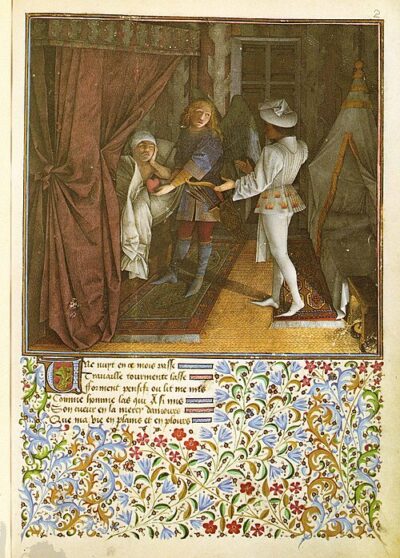
Très Riches Heures du duc de Berry is an illuminated manuscript book of hours. It came out in 1411. It was created by Barthélemy d'Eyck, Limbourg brothers and Jean Colombe.
- Came out
- 1410s (1411–1416)
- Created by
- Barthélemy d'Eyck
- Country of origin
- France
All 10 facts, and where they come from
Facts
10 facts · 0 confirmed by two sources · 1 cited · 8 from one source · 1 where the sources disagree
What’s different
- Came out: we show 1410s (1411–1416) (Sources disagree). Wikidata also lists 1440s and 1480s
Where this comes from
Papalocal keeps its own record. It started from these sources; what each one said is kept here as it was copied, so a change on their side never changes this page by itself. Tap one to read its version.
What Wikidata says · copied November 19, 2026 · revision 2565143333
- Described as
- illuminated manuscript book of hours
- Other names
- Tres Riches Heures du duc de Berry, Les Très Riches Heurs du Duc de Berry, Chantilly. Musée Condé. Bibliothèque. Mss. (65)
- What it is
- book of hours; illuminated manuscript
- Created by
- Barthélemy d'Eyck; Limbourg brothers (1410–1416) · 1 reference; Jean Colombe
- Language
- Latin
- Country of origin
- France
- Came out
- 1410s (1411–1416) · 2 references; 1440s; 1480s (1485–1486)
- Located in
- Chantilly
- Country
- France
- Wikipedias with a page
- 43
Wikidata item Q211062 (wikidata.org/wiki/Q211062), public domain (CC0). Copied 2026-11-19.
What Wikipedia says · copied November 19, 2026 · revision 1380933789
The Très Riches Heures du Duc de Berry (French pronunciation: [tʁɛ ʁiʃz‿œʁ dy dyk də beʁi]; lit. 'The very rich Hours of the Duke of Berry'), or Très Riches Heures (also referred to more colloquially as "The Très Riches Heures of Jean, Duke of Berry") is an illuminated manuscript that was created between c. 1412 and 1416. It is a book of hours, which is a Christian devotional book and collection of prayers said at canonical hours that originated in the 13th century as a means of bringing daily prayer to the laiety, or laypeople. The manuscript was created for John, Duke of Berry, the brother of King Charles V of France, by Limbourg brothers Paul, Johan and Herman. The book is now MS 65 in the Musée Condé, Chantilly, France.
Consisting of a total of 206 leaves of very fine quality parchment, 30 cm (12 in) in height by 21.5 cm (8+1⁄2 in) in width, the manuscript contains 66 large miniatures and 65 small. The design of the book, which is long and complex, has undergone many changes and reversals. Many artists contributed to its miniatures, calligraphy, initials, and marginal decorations, but determining their precise number and identity remains a matter of debate. Painted largely by artists from the Low Countries, often using rare and costly pigments and gold, and with an unusually large number of illustrations, the book is one of the most lavish late medieval illuminated manuscripts. The work was created in the late artistic phase of the International Gothic style.
When the Limbourg brothers and their sponsor died in 1416 (possibly victims of plague) the manuscript was left unfinished. It was further added upon in the 1440s by an anonymous painter, who many art historians believe was Barthélemy d'Eyck. In 1485–1489, it was brought to its present state by the painter Jean Colombe on behalf of the Duke of Savoy. It was acquired by the Duke of Aumale in 1856.
After three centuries in obscurity, the Très Riches Heures gained wide recognition in the late nineteenth and twentieth centuries, despite having only very limited public exposure at the Musée Condé. Its miniatures helped to shape an ideal image of the Middle Ages in the collective imagination, often being interpreted to serve political and nationalist agendas. This is particularly true for the calendar images, which are the most commonly reproduced. They offer vivid representations of peasants performing agricultural work as well as aristocrats in formal attire, against a background of remarkable medieval architecture.
From the Wikipedia article “Très Riches Heures du Duc de Berry” (en.wikipedia.org/wiki/Très_Riches_Heures_du_Duc_de_Berry), by its contributors, under CC BY-SA 4.0 (creativecommons.org/licenses/by-sa/4.0/). Copied 2026-11-19; not changed.
Confirmed Two sources agree. Cited One source, and it names where it got it. One source One source, without a reference of its own. Sources disagree The sources disagree. We show the best-supported value and keep theirs below.
Picture: Wikimedia Commons: Anatomical Man.jpg · See Commons file page