Triumphs of Caesar
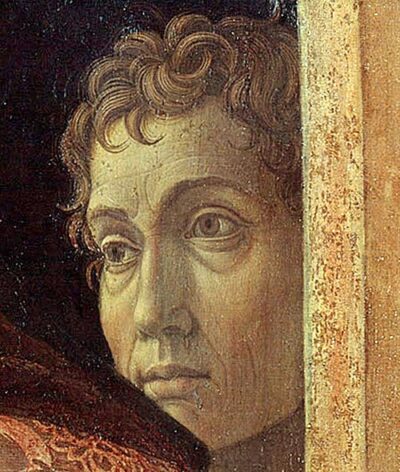
Triumphs of Caesar is a series of paintings by Andrea Mantegna. It came out in 1492.
- Came out
- 1492
- Created by
- Andrea Mantegna
All 3 facts, and where they come from
Facts
3 facts · 0 confirmed by two sources · 0 cited · 3 from one source
Where this comes from
Papalocal keeps its own record. It started from these sources; what each one said is kept here as it was copied, so a change on their side never changes this page by itself. Tap one to read its version.
What Wikidata says · copied November 17, 2026 · revision 2535392537
- Described as
- series of paintings by Andrea Mantegna
- What it is
- cycle of paintings
- Created by
- Andrea Mantegna
- Came out
- 1492
- Wikipedias with a page
- 9
Wikidata item Q385499 (wikidata.org/wiki/Q385499), public domain (CC0). Copied 2026-11-17.
What Wikipedia says · copied November 17, 2026 · revision 1370871452
The Triumphs of Caesar are a series of nine large paintings created by the Italian Renaissance artist Andrea Mantegna between 1484 and 1492 for the Gonzaga Ducal Palace, Mantua. They depict a triumphal military parade celebrating the victory of Julius Caesar in the Gallic Wars. Acknowledged from the time of Mantegna as his greatest masterpiece, they remain the most complete pictorial representation of a Roman triumph ever attempted and together they form the world's largest metric area of Italian Renaissance paintings outside Italy.
Acquired by Charles I in 1629, they now form part of the Royal Collection at Hampton Court Palace near London, where they normally occupy a special gallery, with a new continuous frame intended to capture their original setting, mounted into panelling.
Originally until late 2025 and now extended into 2026, six of the nine are on display in the National Gallery, having been loaned while the Hampton Court gallery is being refurbished.
Originally painted in the fragile medium of egg and glue tempera on canvas, the paintings underwent successive repaintings and restorations through the centuries, and are damaged in many areas. Each canvas measures 2.66 × 2.78 m. In total they cover an area more than 70 metres square.
From the Wikipedia article “Triumphs of Caesar (Mantegna)” (en.wikipedia.org/wiki/Triumphs_of_Caesar_(Mantegna)), by its contributors, under CC BY-SA 4.0 (creativecommons.org/licenses/by-sa/4.0/). Copied 2026-11-17; not changed.
Confirmed Two sources agree. Cited One source, and it names where it got it. One source One source, without a reference of its own. Sources disagree The sources disagree. We show the best-supported value and keep theirs below.