Tsiolkovsky rocket equation
Tsiolkovsky rocket equation is a mathematical equation describing the motion of a rocket.
All 2 facts, and where they come from
Facts
2 facts · 0 confirmed by two sources · 0 cited · 2 from one source
Where this comes from
Papalocal keeps its own record. It started from these sources; what each one said is kept here as it was copied, so a change on their side never changes this page by itself. Tap one to read its version.
What Wikidata says · copied November 17, 2026 · revision 2515883899
- Described as
- mathematical equation describing the motion of a rocket
- Other names
- rocket equation, ideal rocket equation, classical rocket equation
- What it is
- formula
- Named after
- Konstantin Tsiolkovsky
- Wikipedias with a page
- 30
Wikidata item Q834199 (wikidata.org/wiki/Q834199), public domain (CC0). Copied 2026-11-17.
What Wikipedia says · copied November 17, 2026 · revision 1369930570
The classical rocket equation, Tsiolkovsky rocket equation, or ideal rocket equation is a mathematical equation that describes the motion of vehicles that follow the basic principle of a rocket: a device that can apply acceleration to itself using thrust by expelling part of its mass with high velocity and can thereby move due to the conservation of momentum.
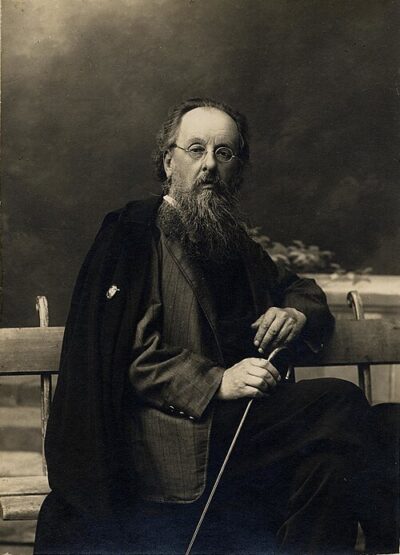
The equation is named after—and usually credited to—Konstantin Tsiolkovsky, who derived and published the formula in 1903, though William Moore had outlined it as early as 1810 and elaborated further in a book published in 1813. Robert Goddard and Hermann Oberth also obtained the same result in 1912 and 1920, respectively. All four of them reasoned and derived the same model independently.
The maximum change of velocity of the vehicle, Δv (with no external forces acting) is:
Δv=velnm0mf=Ispg0lnm0mf,
where:ve is the effective exhaust velocity (which is also equal to Ispg0)
Isp is the specific impulse in dimension of time;
g0 is standard gravity;
ln is the natural logarithm function;
m0 is the initial total mass, including propellant, a.k.a. wet mass;
mf is the final total mass without propellant, a.k.a. dry mass.
Given the effective exhaust velocity determined by the rocket motor's design, the desired delta-v (e.g., orbital speed or escape velocity), and a given dry mass mf, the equation can be solved for the required wet mass m0:
m0=mfeΔv/ve. The required propellant mass is then m0−mf=mf(eΔv/ve−1)
The necessary wet mass grows exponentially with the desired delta-v.
We can also express this as the ratio of fuel mass to payload mass:
m0−mfmf=eΔv/ve−1
and we see that it grows exponentially with Δv/ve
From the Wikipedia article “Tsiolkovsky rocket equation” (en.wikipedia.org/wiki/Tsiolkovsky_rocket_equation), by its contributors, under CC BY-SA 4.0 (creativecommons.org/licenses/by-sa/4.0/). Copied 2026-11-17; not changed.
Confirmed Two sources agree. Cited One source, and it names where it got it. One source One source, without a reference of its own. Sources disagree The sources disagree. We show the best-supported value and keep theirs below.