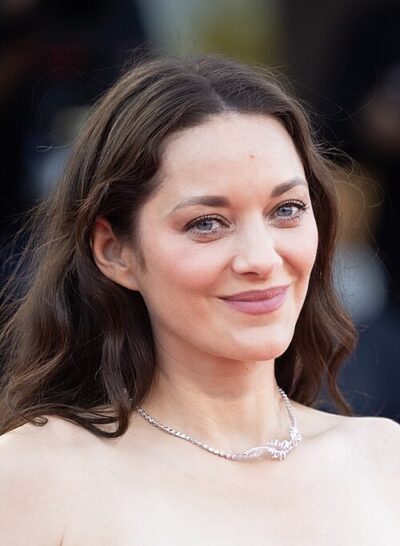
Two Days, One Night
Two Days, One Night is a 2014 film directed by Jean-Pierre Dardenne and Luc Dardenne. It stars Catherine Salée, Christelle Cornil and Fabrizio Rongione. It won the European Film Award for Best Actress and 1 more.
- Released
- 2014
- Directed by
- Jean-Pierre Dardenne
- Genre
- drama film
- Country of origin
- France
All 25 facts, and where they come from
Facts
25 facts · 0 confirmed by two sources · 10 cited · 15 from one source
Where this comes from
Papalocal keeps its own record. It started from these sources; what each one said is kept here as it was copied, so a change on their side never changes this page by itself. Tap one to read its version.
What Wikidata says · copied November 17, 2026 · revision 2564706339
- Described as
- 2014 film directed by Jean-Pierre Dardenne and Luc Dardenne
- Other names
- Deux Jours, Une Nuit, Deux jours, une nuit, Two Days One Night
- What it is
- film
- Directed by
- Jean-Pierre Dardenne; Luc Dardenne
- Screenplay by
- Jean-Pierre Dardenne; Luc Dardenne
- Produced by
- Peter Bouckaert; Denis Freyd; Arlette Zylberberg
- Starring
- Catherine Salée · 5 references; Christelle Cornil · 1 reference; Fabrizio Rongione · 5 references; Marion Cotillard · 6 references; Olivier Gourmet · 3 references; Morgan Marinne · 3 references; Pili Groyne · 4 references; Myriem Akheddiou · 1 reference; Timur Magomedgadzhiev
- Genre
- drama film · 3 references
- Released
- 2014; May 20, 2014; October 30, 2014 · 1 reference
- Original language
- French
- Country of origin
- France; Belgium
- Awards
- European Film Award for Best Actress (2014) · 1 reference; Lumière Award for Best French-Language Film (2015) · 2 references
- Official website
- http://www.lesfilmsdufleuve.be/fr/projet-en-cours/Deux-jours-une-nuit
- Wikipedias with a page
- 36
Wikidata item Q15921236 (wikidata.org/wiki/Q15921236), public domain (CC0). Copied 2026-11-17.
What Wikipedia says · copied November 17, 2026 · revision 1382316846
Two Days, One Night (French: Deux jours, une nuit) is a 2014 drama film written and directed by the Dardenne brothers, starring Marion Cotillard and Fabrizio Rongione, with Christelle Cornil, Olivier Gourmet and Catherine Salée in supporting roles. The film is an international co-production between Belgium, France, and Italy, and had its world premiere at the 2014 Cannes Film Festival, where it competed for the Palme d'Or. It was released theatrically in Belgium and France on 21 May 2014, through Cinéart and Diaphana, respectively, and in Italy through BIM Distribuzione on 13 November 2014.
Both the film and Cotillard's performance received widespread critical acclaim, and the film sold over 1 million tickets in Europe and grossed $9 million worldwide on a €7 million budget, becoming the Dardenne brothers' highest-grossing film. Among its numerous accolades, the film won the Sydney Film Prize at the 2014 Sydney Film Festival, was nominated for a BAFTA Award for Best Film Not in the English Language, was nominated for two César Awards, was nominated for three European Film Awards (winning Best Actress for Cotillard), and was nominated for nine Magritte Awards (winning three, including Best Film and Best Director for Jean-Pierre and Luc Dardenne). Cotillard also won the National Society of Film Critics Award for Best Actress and the New York Film Critics Circle Award for Best Actress. Time magazine ranked Cotillard's performance in Two Days, One Night as the fourth Best Movie Performance of 2014.
Two Days, One Night was selected as Belgium's submission for the Academy Award for Best Foreign Language Film at the 87th Academy Awards, but was not selected as one of the final five nominees, though Cotillard received a Best Actress nomination for her performance in the film, making her the first actor to be nominated for an Academy Award for a Belgian film.
From the Wikipedia article “Two Days, One Night” (en.wikipedia.org/wiki/Two_Days,_One_Night), by its contributors, under CC BY-SA 4.0 (creativecommons.org/licenses/by-sa/4.0/). Copied 2026-11-17; not changed.
Confirmed Two sources agree. Cited One source, and it names where it got it. One source One source, without a reference of its own. Sources disagree The sources disagree. We show the best-supported value and keep theirs below.