Uncle Remus
Uncle Remus is a folktale of the southern United States. It was created by Joel Chandler Harris.
- Performed by
- James Baskett
- Created by
- Joel Chandler Harris
- Genre
- fairy tale
All 6 facts, and where they come from
Facts
6 facts · 0 confirmed by two sources · 0 cited · 6 from one source
Where this comes from
Papalocal keeps its own record. It started from these sources; what each one said is kept here as it was copied, so a change on their side never changes this page by itself. Tap one to read its version.
What Wikidata says · copied November 17, 2026 · revision 2563741524
- Described as
- folktale of the southern United States
- What it is
- literary work; group of literary works
- Created by
- Joel Chandler Harris · 1 reference
- Performed by
- James Baskett · 1 reference
- Genre
- fairy tale
- Language
- English
- Wikipedias with a page
- 17
Wikidata item Q719143 (wikidata.org/wiki/Q719143), public domain (CC0). Copied 2026-11-17.
What Wikipedia says · copied November 17, 2026 · revision 1377287527
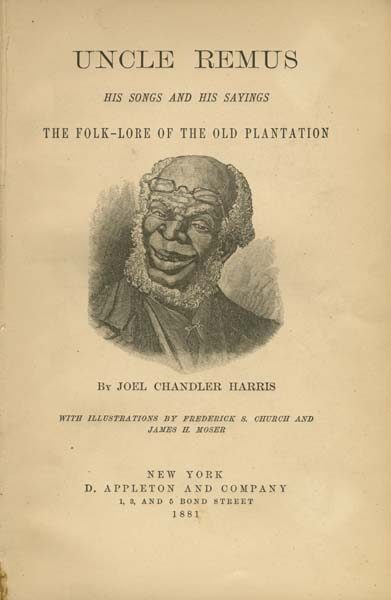
Uncle Remus is the fictional title character and narrator of a collection of African American folktales compiled and adapted by Joel Chandler Harris and published in book form in 1881. Harris was a journalist in post–Reconstruction era Atlanta, and he produced seven Uncle Remus books. He did so by introducing tales that he had heard and framing them in the plantation context. He wrote his stories in a dialect which was his interpretation of the Deep South African-American language of the time. For these framing and stylistic choices, Harris's collection has garnered controversy since its publication.
From the Wikipedia article “Uncle Remus” (en.wikipedia.org/wiki/Uncle_Remus), by its contributors, under CC BY-SA 4.0 (creativecommons.org/licenses/by-sa/4.0/). Copied 2026-11-17; not changed.
Confirmed Two sources agree. Cited One source, and it names where it got it. One source One source, without a reference of its own. Sources disagree The sources disagree. We show the best-supported value and keep theirs below.
Picture: Frederick S. Church and James H. Moser, via Wikimedia Commons · Public domain