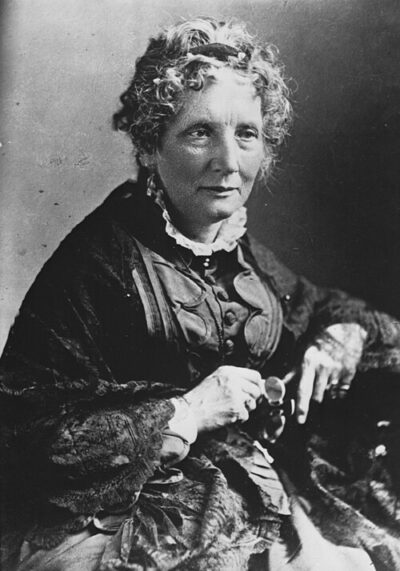
Uncle Tom's Cabin
Uncle Tom's Cabin is a 1852 novel by Harriet Beecher Stowe.
- Published
- March 20, 1852
- Came out
- 1852
- Written by
- Harriet Beecher Stowe
- Genre
- serialized fiction
- Country of origin
- United States
All 8 facts, and where they come from
Facts
8 facts · 0 confirmed by two sources · 0 cited · 8 from one source
Where this comes from
Papalocal keeps its own record. It started from these sources; what each one said is kept here as it was copied, so a change on their side never changes this page by itself. Tap one to read its version.
What Wikidata says · copied November 16, 2026 · revision 2561106461
- Described as
- 1852 novel by Harriet Beecher Stowe
- Other names
- Life Among the Lowly
- What it is
- literary work
- Written by
- Harriet Beecher Stowe
- Genre
- serialized fiction
- Published
- March 20, 1852
- Language
- English
- Country of origin
- United States
- Followed by
- A Key to Uncle Tom's Cabin
- Came out
- 1852 · 1 reference
- Wikipedias with a page
- 71
Wikidata item Q2222 (wikidata.org/wiki/Q2222), public domain (CC0). Copied 2026-11-16.
What Wikipedia says · copied November 16, 2026 · revision 1385720933
Uncle Tom's Cabin; or, Life Among the Lowly is an anti-slavery novel by American author Harriet Beecher Stowe. Published in two volumes in 1852, the novel had a profound effect on attitudes toward African Americans and slavery in the U.S., and is said to have "helped lay the groundwork for the American Civil War".
Stowe, a Connecticut-born teacher at the Hartford Female Seminary, was part of the religious Beecher family and an active abolitionist. She wrote the sentimental novel to depict the horrors of slavery while also asserting that Christian love could overcome slavery. The novel focuses on the character of Uncle Tom, a long-suffering black slave around whom the stories of the other characters revolve.
In the United States, Uncle Tom's Cabin was the best-selling novel and the second best-selling book of the 19th century, following the Bible. It is credited with helping fuel the abolitionist cause in the 1850s. The influence attributed to the book was so great that a apocryphal story arose of Abraham Lincoln meeting Stowe at the start of the Civil War and declaring, "So this is the little lady who started this great war."
The book and the plays it inspired helped popularize a number of negative stereotypes about black people, including that of the namesake character "Uncle Tom". The term came to be associated with an excessively subservient person. These later associations with Uncle Tom's Cabin have, to an extent, overshadowed the historical effects of the book as a "vital antislavery tool". Nonetheless, the novel remains a "landmark" in protest literature, with later books such as The Jungle by Upton Sinclair and Silent Spring by Rachel Carson owing a large debt to it.
From the Wikipedia article “Uncle Tom's Cabin” (en.wikipedia.org/wiki/Uncle_Tom's_Cabin), by its contributors, under CC BY-SA 4.0 (creativecommons.org/licenses/by-sa/4.0/). Copied 2026-11-16; not changed.
Confirmed Two sources agree. Cited One source, and it names where it got it. One source One source, without a reference of its own. Sources disagree The sources disagree. We show the best-supported value and keep theirs below.
Picture: Wikimedia Commons: Harriet Beecher Stowe, Uncle Tom's Cabin, vol. 1, 1852, title page (clean).jpg · See Commons file page