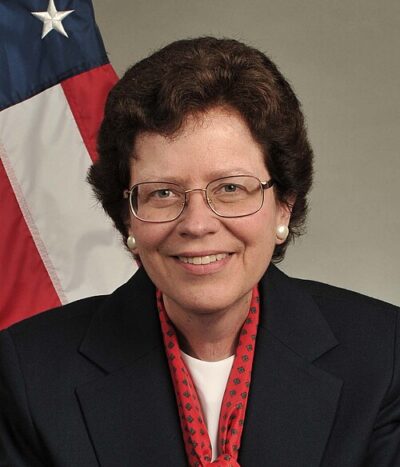
Under Secretary of Commerce for Economic Affairs
Under Secretary of Commerce for Economic Affairs is a post in U.S. government. It was created in 1982. It is an office of the United States.
- Office of
- United States
- Country
- United States
- Created
- June 16, 1982
All 5 facts, and where they come from
Facts
5 facts · 0 confirmed by two sources · 0 cited · 5 from one source
Where this comes from
Papalocal keeps its own record. It started from these sources; what each one said is kept here as it was copied, so a change on their side never changes this page by itself. Tap one to read its version.
What Wikidata says · copied November 19, 2026 · revision 2570694912
- Described as
- post in U.S. government
- What it is
- undersecretary; position
- Created
- June 16, 1982
- Country
- United States · 1 reference
- Office of
- United States
- Wikipedias with a page
- 1
Wikidata item Q7883155 (wikidata.org/wiki/Q7883155), public domain (CC0). Copied 2026-11-19.
What Wikipedia says · copied November 19, 2026 · revision 1383536049
The under secretary of commerce for economic affairs, or USC(EA), is a high-ranking official in the United States Department of Commerce that serves as the principal adviser to the United States Secretary of Commerce on economic analysis.
The under secretary is appointed by the president of the United States and confirmed by the United States Senate to serve at the pleasure of the president. In October 2021, President Joe Biden nominated Jed Kolko to be under secretary. He was confirmed by the United States Senate on April 7, 2022, and sworn in on April 19. Kolko resigned in February 2024 and was succeeded by acting under secretary Oliver Wise.
From the Wikipedia article “Under Secretary of Commerce for Economic Affairs” (en.wikipedia.org/wiki/Under_Secretary_of_Commerce_for_Economic_Affairs), by its contributors, under CC BY-SA 4.0 (creativecommons.org/licenses/by-sa/4.0/). Copied 2026-11-19; not changed.
Confirmed Two sources agree. Cited One source, and it names where it got it. One source One source, without a reference of its own. Sources disagree The sources disagree. We show the best-supported value and keep theirs below.