Unified Lumumbist Party
The Unified Lumumbist Party is a Congolese political party. It was founded in 1964. Its headquarters are in Limete. It stands for left-wing nationalism.
- Founded
- August 22, 1964
- Ideology
- left-wing nationalism
- Chair
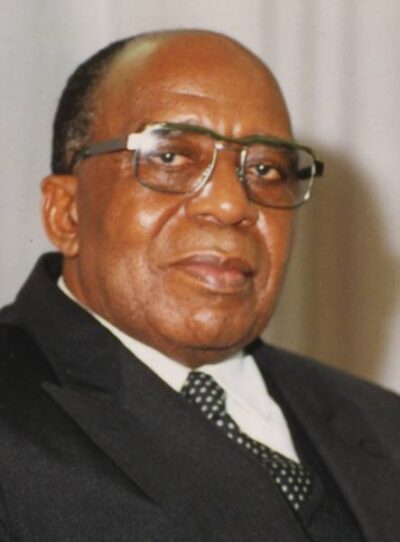
- Antoine Gizenga
All 7 facts, and where they come from
Facts
7 facts · 0 confirmed by two sources · 0 cited · 7 from one source
Where this comes from
Papalocal keeps its own record. It started from these sources; what each one said is kept here as it was copied, so a change on their side never changes this page by itself. Tap one to read its version.
What Wikidata says · copied November 17, 2026 · revision 2262810442
- Described as
- Congolese political party
- What it is
- political party
- Founded
- August 22, 1964
- Headquarters
- Limete
- Country
- Democratic Republic of the Congo
- Chair
- Antoine Gizenga
- Ideology
- left-wing nationalism
- Official website
- http://www.palu-rdc.com
- Wikipedias with a page
- 10
Wikidata item Q3087061 (wikidata.org/wiki/Q3087061), public domain (CC0). Copied 2026-11-17.
What Wikipedia says · copied November 17, 2026 · revision 1364922545
Unified Lumumbist Party (French: Parti Lumumbiste Unifié or PALU) is a political party in the Democratic Republic of the Congo. The party's name comes from Patrice Lumumba, the first prime minister of Congo after its independence in 1960 from the Belgian colonial empire.
It was led by Antoine Gizenga who placed third in the 2006 general election. Gizenga backed the incumbent president Joseph Kabila in the runoff election, and was subsequently named prime minister in December 2006. PALU also won 34 out of 500 seats in the new parliament and became the third largest party. In the 2007 senate election, the party won only two out of 108 seats.
Gizenga resigned as prime minister on 25 September 2008 for reasons related to age and health, and on 10 October 2008 Adolphe Muzito, another member of PALU who had served as Budget Minister under Gizenga, was appointed to succeed him. Muzito served as prime minister from 2008 until his resignation on 6 March 2012.
In the 2011 general election, PALU lost 15 seats in the lower house, sinking to 19 seats and becoming the sixth largest party in parliament. Additionally, PALU did not choose to field a presidential candidate in the election.
In 12–13 December 2014, the party was admitted into the Socialist International as an observer affiliate. On 3 October 2018, PALU and its parliamentary allies exited the Presidential Majority coalition in anticipation of the 2018 general elections.
From the Wikipedia article “Unified Lumumbist Party” (en.wikipedia.org/wiki/Unified_Lumumbist_Party), by its contributors, under CC BY-SA 4.0 (creativecommons.org/licenses/by-sa/4.0/). Copied 2026-11-17; not changed.
Confirmed Two sources agree. Cited One source, and it names where it got it. One source One source, without a reference of its own. Sources disagree The sources disagree. We show the best-supported value and keep theirs below.