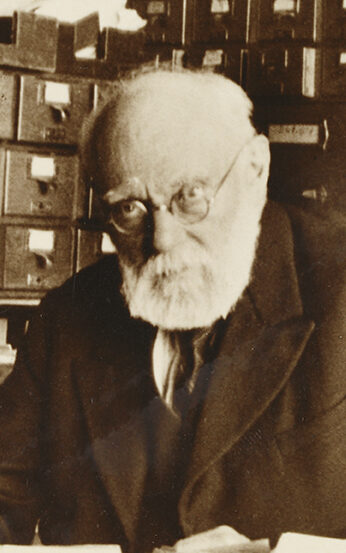
Universal Decimal Classification
Universal Decimal Classification is a bibliographic and library classification system. It came out in 1895. It is based on Dewey Decimal Classification.
- Came out
- 1895
All 6 facts, and where they come from
Facts
6 facts · 0 confirmed by two sources · 3 cited · 3 from one source
Where this comes from
Papalocal keeps its own record. It started from these sources; what each one said is kept here as it was copied, so a change on their side never changes this page by itself. Tap one to read its version.
What Wikidata says · copied November 17, 2026 · revision 2564554507
- Described as
- bibliographic and library classification system
- Other names
- UDC, UDK
- What it is
- universal classification scheme; decimal classification; series of creative works
- Based on
- Dewey Decimal Classification · 1 reference
- Came out
- 1895 · 1 reference
- Official website
- https://udcc.org/ · 1 reference
- Wikipedias with a page
- 48
Wikidata item Q243350 (wikidata.org/wiki/Q243350), public domain (CC0). Copied 2026-11-17.
What Wikipedia says · copied November 17, 2026 · revision 1384147689
The Universal Decimal Classification (UDC) is a bibliographic and library classification representing the systematic arrangement of all branches of human knowledge organized as a coherent system in which knowledge fields are related and inter-linked. The UDC is a faceted classification system featuring detailed vocabulary and syntax that enables powerful content indexing and information retrieval in large collections. Since 1991, the UDC has been owned and managed by the UDC Consortium, a non-profit international association of publishers with headquarters in The Hague, Netherlands.
Unlike other library classification schemes that started their life as national systems, the UDC was conceived and maintained as an international scheme. Its translation into other languages started at the beginning of the 20th century and has since been published in various printed editions in over 40 languages. UDC Summary, an abridged Web version of the scheme, is available in over 50 languages. The classification has been modified and extended over the years to cope with increasing output in all areas of human knowledge, and is still under continuous review to take account of new developments.
Albeit originally designed as an indexing and retrieval system, due to its logical structure and scalability, UDC has become one of the most widely used knowledge organization systems in libraries, where it is used for either shelf arrangement, content indexing or both. UDC codes can describe any type of document or object to any desired level of detail. These can include textual documents and other media such as films, video and sound recordings, illustrations, maps as well as realia such as museum objects.
From the Wikipedia article “Universal Decimal Classification” (en.wikipedia.org/wiki/Universal_Decimal_Classification), by its contributors, under CC BY-SA 4.0 (creativecommons.org/licenses/by-sa/4.0/). Copied 2026-11-17; not changed.
Confirmed Two sources agree. Cited One source, and it names where it got it. One source One source, without a reference of its own. Sources disagree The sources disagree. We show the best-supported value and keep theirs below.
Picture: Wikimedia Commons: La Classification Décimale Universelle.jpg · See Commons file page