University "Marta Abreu" of Las Villas
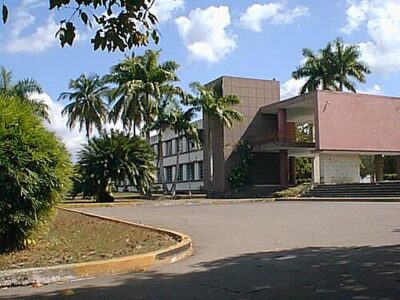
University "Marta Abreu" of Las Villas is a public university in Santa Clara, Cuba. It was founded in 1952.
- Located in
- Santa Clara
- Country
- Cuba
- Founded
- November 30, 1952
- What it is
- university
All 7 facts, and where they come from
Facts
7 facts · 0 confirmed by two sources · 2 cited · 4 from one source · 1 where the sources disagree
What’s different
- Founded: we show November 30, 1952 (Sources disagree). Wikidata also lists 1952
Where this comes from
Papalocal keeps its own record. It started from these sources; what each one said is kept here as it was copied, so a change on their side never changes this page by itself. Tap one to read its version.
What Wikidata says · copied November 17, 2026 · revision 2570712464
- Described as
- public university in Santa Clara, Cuba
- Other names
- UCLV, University Marta Abreu of Las Villas
- What it is
- university; open-access publisher · 1 reference
- Founded
- November 30, 1952; 1952
- Located in
- Santa Clara · 1 reference
- Country
- Cuba · 1 reference
- Named after
- Marta Abreu
- Official website
- http://www.uclv.edu.cu/ · 1 reference
- Wikipedias with a page
- 9
Wikidata item Q6156410 (wikidata.org/wiki/Q6156410), public domain (CC0). Copied 2026-11-17.
What Wikipedia says · copied November 17, 2026 · revision 1383177420
The University "Marta Abreu" of Las Villas (Spanish: Universidad Central "Marta Abreu" de Las Villas, UCLV) is an undergraduate and graduate public university in Santa Clara, Cuba, founded in 1952 and having a remote campus called "Universidad de Montaña" in Topes de Collantes, the heart of the Escambray Mountains.
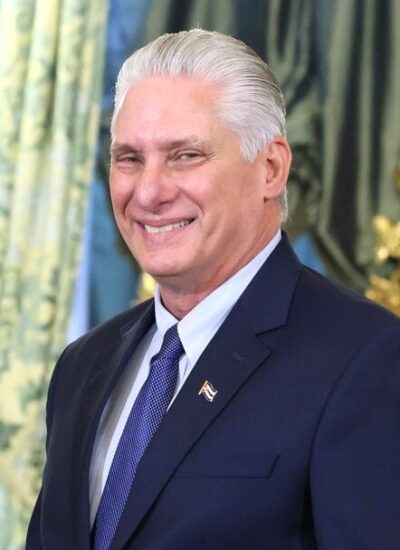
It is the alma mater of the current President of Cuba and First Secretary of the Communist Party of Cuba, Miguel Díaz-Canel.
From the Wikipedia article “University "Marta Abreu" of Las Villas” (en.wikipedia.org/wiki/University_"Marta_Abreu"_of_Las_Villas), by its contributors, under CC BY-SA 4.0 (creativecommons.org/licenses/by-sa/4.0/). Copied 2026-11-17; not changed.
Confirmed Two sources agree. Cited One source, and it names where it got it. One source One source, without a reference of its own. Sources disagree The sources disagree. We show the best-supported value and keep theirs below.
Picture: Wilder Mendez / Lezumbalaberenjena at en.wikipedia, via Wikimedia Commons · Public domain