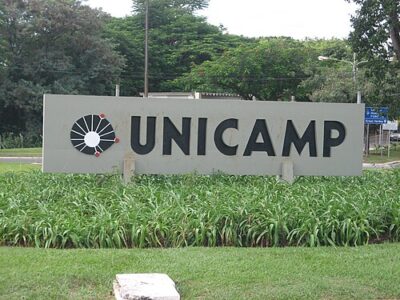
University of Campinas
The University of Campinas is a public research university in Campinas, São Paulo, Brazil. It was founded in 1966 by Zeferino Vaz. 20,804 students study there (2025).
- Located in
- Campinas
- Country
- Brazil
- Founded
- October 5, 1966
- Students
- 20,804 (2025)
- What it is
- public university
All 11 facts, and where they come from
Facts
11 facts · 0 confirmed by two sources · 8 cited · 3 from one source
Where this comes from
Papalocal keeps its own record. It started from these sources; what each one said is kept here as it was copied, so a change on their side never changes this page by itself. Tap one to read its version.
What Wikidata says · copied November 17, 2026 · revision 2559945538
- Described as
- public research university in Campinas, São Paulo, Brazil
- Other names
- UNICAMP, State University of Campinas, Universidade Estadual de Campinas, Universidade de Campinas
- What it is
- public university; open-access publisher · 1 reference; autarky · 1 reference
- Founded
- October 5, 1966
- Founded by
- Zeferino Vaz · 1 reference
- Headquarters
- Campinas · 1 reference
- Located in
- Campinas · 1 reference
- Country
- Brazil · 2 references
- Part of
- São Paulo State Secretariat of Science, Technology and Innovation (2023–) · 1 reference
- Students
- 40,850 · 1 reference
- Official website
- http://www.unicamp.br · 1 reference
- Wikipedias with a page
- 20
Wikidata item Q2060678 (wikidata.org/wiki/Q2060678), public domain (CC0). Copied 2026-11-17.
What Wikipedia says · copied November 17, 2026 · revision 1380071818
The State University of Campinas (Portuguese: Universidade Estadual de Campinas), commonly called Unicamp, is a public research university in the state of São Paulo, Brazil.
Established in 1962, Unicamp was designed from scratch as an integrated research center unlike other top Brazilian universities, usually created by the consolidation of previously existing schools and institutes. Its research focus reflects on almost half of its students being graduate students, the largest proportion across all large universities in Brazil, and also in the large number of graduate programs it offers: 153 compared to 70 undergraduate programs. It also offers several non-degree granting open-enrollment courses to around 8,000 students through its extension school.
Its main campus occupies 3.5 square kilometres (860 acres) located in the district of Barão Geraldo, a suburban area 12 kilometres (7.5 mi) from the downtown center of Campinas, built shortly after the creation of the university. It also has satellite campuses in Limeira, Piracicaba and Paulínia, and manages two technical high schools located in Campinas and Limeira. Funding is provided almost entirely by the state government and, like other Brazilian public universities, no tuition fees or administrative fees are charged for undergraduate and graduate programs.
Unicamp is responsible for around 15% of Brazilian research, a disproportionately high number when compared to much larger and older institutions in the country such as the University of São Paulo. It also produces more patents than any other research organization in Brazil, being second only to the state-owned oil company, Petrobras.
From the Wikipedia article “State University of Campinas” (en.wikipedia.org/wiki/State_University_of_Campinas), by its contributors, under CC BY-SA 4.0 (creativecommons.org/licenses/by-sa/4.0/). Copied 2026-11-17; not changed.
Confirmed Two sources agree. Cited One source, and it names where it got it. One source One source, without a reference of its own. Sources disagree The sources disagree. We show the best-supported value and keep theirs below.
Picture: Priscila Micaroni Lalli (prilalli@gmail.com), via Wikimedia Commons · CC BY-SA 2.5
People connected 7
Studied here
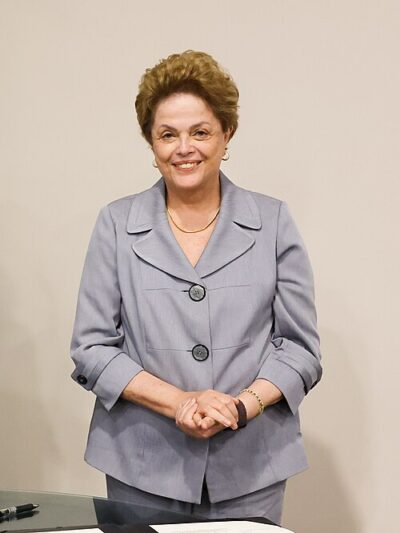 Dilma Rousseff36th President of Brazil (2011-2016), 3rd President of the New Development Bank (BRICS)
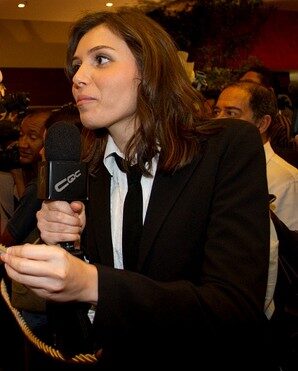 Monica IozziBrazilian actress and reporter
 Nelson Prudêncioathletics competitor (1944–2012)
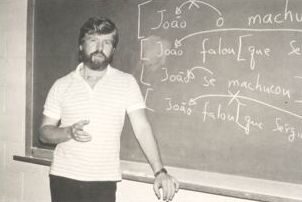 Daniel EverettAmerican linguist (born 1951)
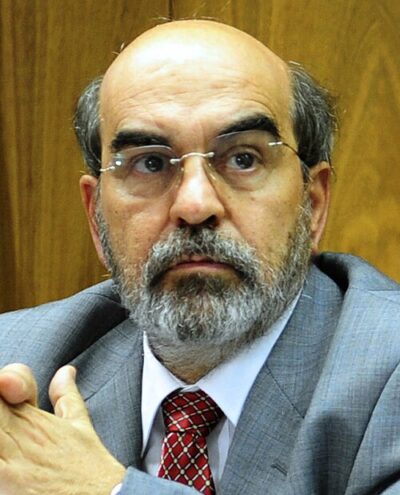 José Graziano da SilvaBrazilian politician