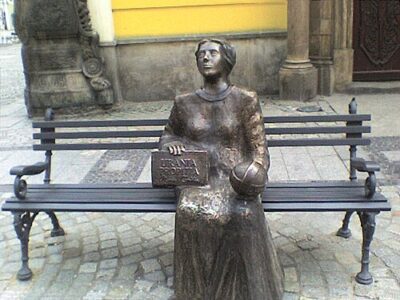
Urania Propitia
Urania Propitia is a book of astronomical tables written by Maria Cunitz and published in 1650.
- Released
- 1650
- Written by
- Maria Cunitz
All 3 facts, and where they come from
Facts
3 facts · 0 confirmed by two sources · 1 cited · 2 from one source
Where this comes from
Papalocal keeps its own record. It started from these sources; what each one said is kept here as it was copied, so a change on their side never changes this page by itself. Tap one to read its version.
What Wikidata says · copied November 17, 2026 · revision 2477981164
- Described as
- a book of astronomical tables written by Maria Cunitz and published in 1650
- What it is
- version, edition or translation
- Written by
- Maria Cunitz
- Released
- 1650 · 1 reference
- Wikipedias with a page
- 2
Wikidata item Q17144224 (wikidata.org/wiki/Q17144224), public domain (CC0). Copied 2026-11-17.
What Wikipedia says · copied November 17, 2026 · revision 1385463196
Urania Propitia (lit. 'kind/beneficent Urania') is a book of astronomical tables written by the Silesian astronomer Maria Cunitz and published in 1650. As Maria Cunitz was the daughter of both a physician and mathematician, it was her ability to grasp complex mathematics quickly and transcribe her findings as a polyglot that allowed her to do what few women had done before her.
The work served as a simplification of the Rudolphine Tables (1627) by Johannes Kepler, with Cunitz attempting to both increase the accuracy and to simplify the calculations from the original work. While she corrected a number of Kepler's computational errors, her equations also include inaccuracies. Cunitz's work is credited with making astrological tables accessible outside of the era's universities. Cunitz's cosmology combined elements from the cosmologies of both Kepler and Tycho Brahe. Like Brahe, she thought that the Sun and the Moon orbit around the planet Earth, while the rest of the planets in the Solar System orbit around the Sun. In her work, the physics within the cosmos involve ellipticals and aphelions.
From the Wikipedia article “Urania Propitia” (en.wikipedia.org/wiki/Urania_Propitia), by its contributors, under CC BY-SA 4.0 (creativecommons.org/licenses/by-sa/4.0/). Copied 2026-11-17; not changed.
Confirmed Two sources agree. Cited One source, and it names where it got it. One source One source, without a reference of its own. Sources disagree The sources disagree. We show the best-supported value and keep theirs below.
Picture: Wikimedia Commons: Urania.propitia.png · See Commons file page