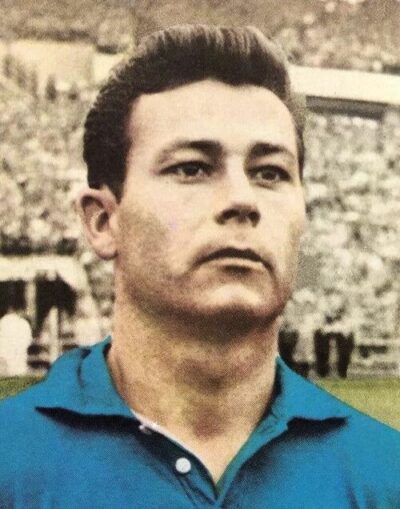
US Marocaine Casablanca
US Marocaine Casablanca is an association football club. It was founded in 1913. Its home is Stade Larbi Benbarek.
- Sport
- association football
- Home venue
- Stade Larbi Benbarek
- Founded
- 1913
All 7 facts, and where they come from
Facts
7 facts · 0 confirmed by two sources · 0 cited · 7 from one source
Where this comes from
Papalocal keeps its own record. It started from these sources; what each one said is kept here as it was copied, so a change on their side never changes this page by itself. Tap one to read its version.
What Wikidata says · copied November 17, 2026 · revision 2542278093
- Described as
- association football club
- What it is
- association football club
- Founded
- 1913
- Ended
- 1958
- Headquarters
- Casablanca
- Country
- Morocco
- Sport
- association football
- Home venue
- Stade Larbi Benbarek
- Wikipedias with a page
- 6
Wikidata item Q1573081 (wikidata.org/wiki/Q1573081), public domain (CC0). Copied 2026-11-17.
What Wikipedia says · copied November 17, 2026 · revision 1365183474
Union Sportive Marocaine (USM) (Arabic: الاتحاد الرياضي المغربي) was a Moroccan multi-sport club based in Casablanca. Founded on April 13, 1913, by Louis Andrieux, it became one of the most successful and influential sports organizations during the French protectorate in Morocco.
USM was considered one of the pioneers of organized sport in Morocco. Established only one year after the beginning of the French Protectorate and two years before the creation of Morocco's first football championship, the club played a major role in the development of Moroccan sports. Throughout its history, USM featured several internationally renowned athletes, including Mario Zatelli, Larbi Ben Barek, Just Fontaine, and world boxing champion Marcel Cerdan.
From the Wikipedia article “US Marocaine” (en.wikipedia.org/wiki/US_Marocaine), by its contributors, under CC BY-SA 4.0 (creativecommons.org/licenses/by-sa/4.0/). Copied 2026-11-17; not changed.
Confirmed Two sources agree. Cited One source, and it names where it got it. One source One source, without a reference of its own. Sources disagree The sources disagree. We show the best-supported value and keep theirs below.