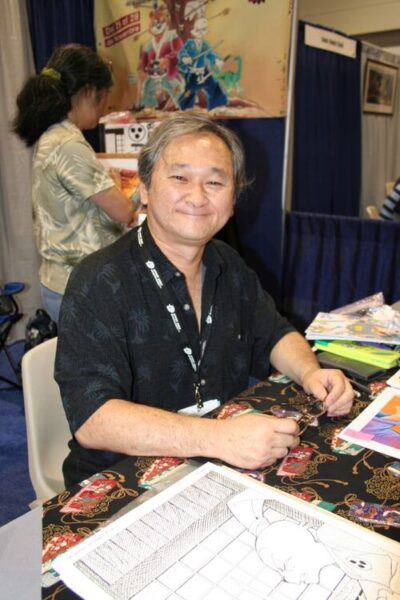
Usagi Yojimbo
Usagi Yojimbo is a comic book series by Stan Sakai.
- Written by
- Stan Sakai
- Genre
- anthropomorphic comic
- Country of origin
- United States
All 6 facts, and where they come from
Facts
6 facts · 0 confirmed by two sources · 0 cited · 6 from one source
Where this comes from
Papalocal keeps its own record. It started from these sources; what each one said is kept here as it was copied, so a change on their side never changes this page by itself. Tap one to read its version.
What Wikidata says · copied November 19, 2026 · revision 2569314046
- Described as
- comic book series by Stan Sakai
- What it is
- comic book series
- Written by
- Stan Sakai
- Genre
- anthropomorphic comic
- Language
- English · 1 reference
- Country of origin
- United States
- Official website
- http://www.usagiyojimbo.com
- Wikipedias with a page
- 20
Wikidata item Q901608 (wikidata.org/wiki/Q901608), public domain (CC0). Copied 2026-11-19.
What Wikipedia says · copied November 19, 2026 · revision 1386319568
Usagi Yojimbo (兎用心棒, Usagi Yōjinbō; "rabbit bodyguard") is a comic book series written and illustrated by Stan Sakai. It is set primarily at the beginning of the Edo period of Japanese history and features anthropomorphic animals in place of humans. The main character is a rabbit rōnin, Miyamoto Usagi, whom Sakai based partially on the famous swordsman Miyamoto Musashi. Usagi wanders the land on a musha shugyō (a warrior's pilgrimage), occasionally selling his services as a bodyguard.
Usagi Yojimbo is heavily influenced by Japanese cinema; it has included references to the work of Akira Kurosawa (the title of the series is derived from Kurosawa's 1961 film Yojimbo), as well as to icons of Japanese pop culture, such as Lone Wolf and Cub, Zatoichi, and Godzilla. The series is also partially influenced by Groo the Wanderer by Sergio Aragonés (Sakai is the letterer for that series), but the overall tone of Usagi Yojimbo is more serious and reflective. The series follows the standard traditional Japanese naming-convention for all featured characters: their family names come before their given names.
The books are primarily episodic but occasionally featured underlying interconnected plots that form long extended storylines, though there are some novel-length narratives. The stories include many references to Japanese history and folklore, and sometimes include mythical creatures. The architecture, clothes, weapons and other objects are drawn with a faithfulness to the period's style. There are often stories with the purpose to illustrate various elements of Japanese arts and crafts, such as the fashioning of kites, swords, and pottery. Those efforts have been successful enough for the series to be awarded a Parents' Choice Award in 1990 for its educational value through Sakai's "skillful weaving of facts and legends into his work."
Usagi Yojimbo debuted in Albedo Anthropomorphics #2, published by Thoughts and Images in November 1984. Early positive reviews and an advertisement in Bud Plant's Spring Catalog in 1985 helped propel the series' popularity. Sakai accepted an offer to move the titular character to Fantagraphics Books, where he appeared in several issues of the new anthropomorphic anthology series Critters. Usagi's popularity influenced Fantagraphics to then release the Usagi Yojimbo Summer Special in October 1986 and then to give the titular character his own ongoing series, with issue #1 being published in July 1987. Usagi was named the 31st-greatest comic book character by Empire magazine and was ranked 92nd in IGN's list of the top 100 comic book heroes. Rolling Stone ranked Usagi Yojimbo number 43 in their list of the "50 Best Non-Superhero Graphic Novels".
From the Wikipedia article “Usagi Yojimbo” (en.wikipedia.org/wiki/Usagi_Yojimbo), by its contributors, under CC BY-SA 4.0 (creativecommons.org/licenses/by-sa/4.0/). Copied 2026-11-19; not changed.
Confirmed Two sources agree. Cited One source, and it names where it got it. One source One source, without a reference of its own. Sources disagree The sources disagree. We show the best-supported value and keep theirs below.