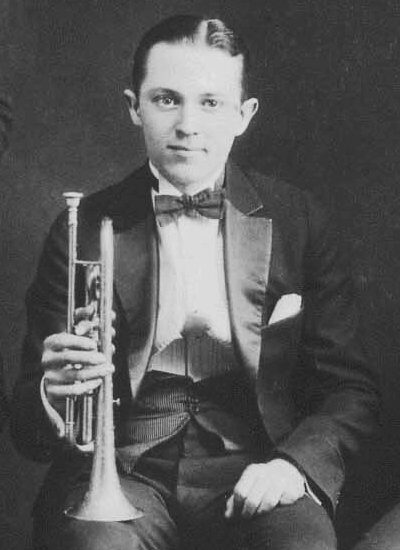
Victor Recording Orchestra
Victor Recording Orchestra is an American musical group; jazz band led by Jean Goldkette. It was founded in 1924.
- Founded
- 1924
- Genre
- jazz
- Country of origin
- United States
All 4 facts, and where they come from
Facts
4 facts · 0 confirmed by two sources · 0 cited · 4 from one source
Where this comes from
Papalocal keeps its own record. It started from these sources; what each one said is kept here as it was copied, so a change on their side never changes this page by itself. Tap one to read its version.
What Wikidata says · copied November 17, 2026 · revision 2219603801
- Described as
- American musical group; jazz band led by Jean Goldkette
- What it is
- musical group
- Genre
- jazz
- Country of origin
- United States
- Founded
- 1924
- Wikipedias with a page
- 1
Wikidata item Q7926275 (wikidata.org/wiki/Q7926275), public domain (CC0). Copied 2026-11-17.
What Wikipedia says · copied November 17, 2026 · revision 1377892323
The Victor Recording Orchestra was an American jazz band led by Jean Goldkette. It was known for its innovative arrangements and strong rhythm.
Among its members were:Bix Beiderbecke
Steve Brown
Hoagy Carmichael
Jimmy Dorsey
Tommy Dorsey
Eddie Lang
Don Murray
Howdy Quicksell
Pee Wee Russell
Frankie Trumbauer
Joe Venuti
Bill Rank
Among the band's own arrangers was Russ Morgan; the band also traded arrangements with Fletcher Henderson. The band's most popular records included "After I Say I'm Sorry," "Dinah," "Gimme a Little Kiss, Will Ya, Huh?" and "Lonesome and Sorry." According to Rex Stewart, the primitive recording techniques of the day (for example, bass and snare drums could not be recorded) failed to provide a true record of the band.
From the Wikipedia article “Victor Recording Orchestra” (en.wikipedia.org/wiki/Victor_Recording_Orchestra), by its contributors, under CC BY-SA 4.0 (creativecommons.org/licenses/by-sa/4.0/). Copied 2026-11-17; not changed.
Confirmed Two sources agree. Cited One source, and it names where it got it. One source One source, without a reference of its own. Sources disagree The sources disagree. We show the best-supported value and keep theirs below.