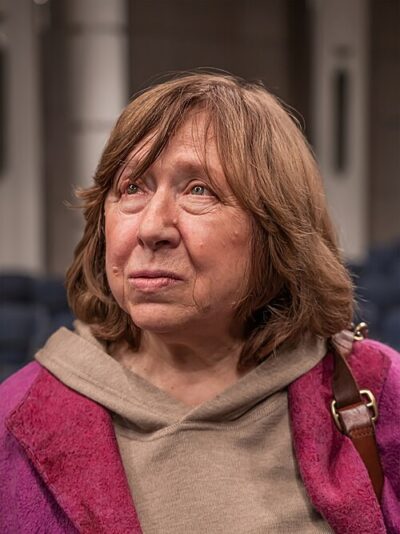
Voices from Chernobyl
Voices from Chernobyl is a non-fiction work by Svetlana Alexievich. It came out in 1997. It is part of Voices of Utopia.
- Published
- 1997
- Written by
- Svetlana Alexievich
- Genre
- non-fiction
- Country of origin
- Belarus
All 9 facts, and where they come from
Facts
9 facts · 0 confirmed by two sources · 0 cited · 9 from one source
Where this comes from
Papalocal keeps its own record. It started from these sources; what each one said is kept here as it was copied, so a change on their side never changes this page by itself. Tap one to read its version.
What Wikidata says · copied November 17, 2026 · revision 2555988497
- Described as
- non-fiction work by Svetlana Alexievich
- Other names
- Voices from Chernobyl: The Oral History of a Nuclear Disaster
- What it is
- literary work
- Written by
- Svetlana Alexievich · 1 reference
- Genre
- non-fiction
- Published
- 1997
- Language
- Russian
- Country of origin
- Belarus
- Part of the series
- Voices of Utopia
- Comes after
- Zinky Boys: Soviet Voices from a Forgotten War
- Followed by
- Second-Hand Time
- Wikipedias with a page
- 24
Wikidata item Q7939693 (wikidata.org/wiki/Q7939693), public domain (CC0). Copied 2026-11-17.
What Wikipedia says · copied November 17, 2026 · revision 1384316679
Voices from Chernobyl: The Oral History of a Nuclear Disaster (Russian: Чернобыльская молитва, romanized: Chernobylskaya molitva, lit. 'Chernobyl Prayer'), published as Chernobyl Prayer: A Chronicle of the Future in the United Kingdom, is a book about the Chernobyl disaster by the Belarusian Nobel Laureate Svetlana Alexievich.
Chernobyl Prayer was first published in Russian in 1997; a revised, updated edition was released in 2013. The American translation was the National Book Critics Circle Award for Nonfiction recipient during 2005.
From the Wikipedia article “Voices from Chernobyl” (en.wikipedia.org/wiki/Voices_from_Chernobyl), by its contributors, under CC BY-SA 4.0 (creativecommons.org/licenses/by-sa/4.0/). Copied 2026-11-17; not changed.
Confirmed Two sources agree. Cited One source, and it names where it got it. One source One source, without a reference of its own. Sources disagree The sources disagree. We show the best-supported value and keep theirs below.