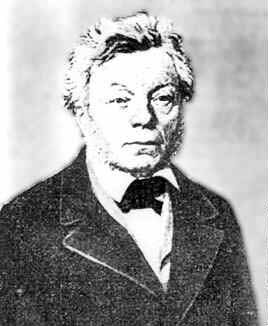
Von Staudt–Clausen theorem
Von Staudt–Clausen theorem is a determines the fractional part of Bernoulli numbers.
All 1 facts, and where they come from
Facts
1 facts · 0 confirmed by two sources · 0 cited · 1 from one source
Where this comes from
Papalocal keeps its own record. It started from these sources; what each one said is kept here as it was copied, so a change on their side never changes this page by itself. Tap one to read its version.
What Wikidata says · copied November 18, 2026 · revision 2504961726
- Described as
- determines the fractional part of Bernoulli numbers
- What it is
- theorem
- Wikipedias with a page
- 8
Wikidata item Q3527230 (wikidata.org/wiki/Q3527230), public domain (CC0). Copied 2026-11-18.
What Wikipedia says · copied November 18, 2026 · revision 1229607602
In number theory, the von Staudt–Clausen theorem is a result determining the fractional part of Bernoulli numbers, found independently by
Karl von Staudt (1840) and Thomas Clausen (1840).
Specifically, if n is a positive integer and we add 1/p to the Bernoulli number B2n for every prime p such that p − 1 divides 2n, then we obtain an integer; that is,
B2n+∑(p−1)|2n1p∈ℤ.
This fact immediately allows us to characterize the denominators of the non-zero Bernoulli numbers B2n as the product of all primes p such that p − 1 divides 2n; consequently, the denominators are square-free and divisible by 6.
These denominators are6, 30, 42, 30, 66, 2730, 6, 510, 798, 330, 138, 2730, 6, 870, 14322, 510, 6, 1919190, 6, 13530, ... (sequence A002445 in the OEIS).
The sequence of integers B2n+∑(p−1)|2n1p is1, 1, 1, 1, 1, 1, 2, -6, 56, -528, 6193, -86579, 1425518, -27298230, ... (sequence A000146 in the OEIS).
From the Wikipedia article “Von Staudt–Clausen theorem” (en.wikipedia.org/wiki/Von_Staudt–Clausen_theorem), by its contributors, under CC BY-SA 4.0 (creativecommons.org/licenses/by-sa/4.0/). Copied 2026-11-18; not changed.
Confirmed Two sources agree. Cited One source, and it names where it got it. One source One source, without a reference of its own. Sources disagree The sources disagree. We show the best-supported value and keep theirs below.