Wars of America
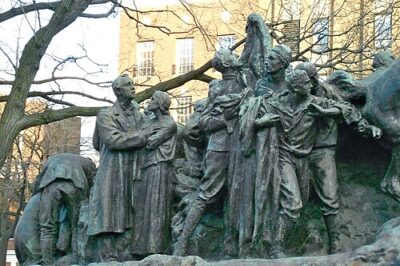
Wars of America is a sculpture by Gutzon Borglum. It came out in 1926.
- Came out
- 1926
- Created by
- Gutzon Borglum
- Genre
- group of sculptures
All 6 facts, and where they come from
Facts
6 facts · 0 confirmed by two sources · 0 cited · 6 from one source
Where this comes from
Papalocal keeps its own record. It started from these sources; what each one said is kept here as it was copied, so a change on their side never changes this page by itself. Tap one to read its version.
What Wikidata says · copied November 17, 2026 · revision 2570686691
- Described as
- sculpture by Gutzon Borglum
- What it is
- sculpture
- Created by
- Gutzon Borglum
- Genre
- group of sculptures
- Came out
- 1926
- Located in
- Newark
- Country
- United States
- Wikipedias with a page
- 3
Wikidata item Q7970861 (wikidata.org/wiki/Q7970861), public domain (CC0). Copied 2026-11-17.
What Wikipedia says · copied November 17, 2026 · revision 1385039585
Wars of America is a colossal bronze sculpture by Mount Rushmore sculptor Gutzon Borglum and his assistant Luigi Del Bianco containing "forty-two humans and two horses", located in Military Park in Newark, New Jersey. The sculpture sets on a base of granite from Stone Mountain.
The sculpture was erected in 1926, eight years after World War I ended, but its intent was broadened to honor all of America's war dead. In describing it, Borglum said "The design represents a great spearhead. Upon the green field of this spearhead we have placed a Tudor sword, the hilt of which represents the American nation at a crisis, answering the call to arms."
The work was funded by a $100,000 bequest by Newark businessman Amos Hoagland Van Horn, who also funded Borglums Seated Lincoln, also located in Newark.
The sculpture was added to the National Register of Historic Places on October 28, 1994.
From the Wikipedia article “Wars of America” (en.wikipedia.org/wiki/Wars_of_America), by its contributors, under CC BY-SA 4.0 (creativecommons.org/licenses/by-sa/4.0/). Copied 2026-11-17; not changed.
Confirmed Two sources agree. Cited One source, and it names where it got it. One source One source, without a reference of its own. Sources disagree The sources disagree. We show the best-supported value and keep theirs below.
Picture: Smallbones, via Wikimedia Commons · CC0