Westward the Course of Empire Takes Its Way
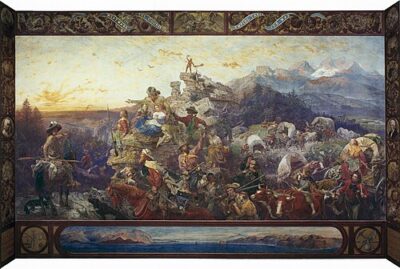
Westward the Course of Empire Takes Its Way is a painting by Emanuel Leutze. It came out in 1862.
- Came out
- 1862
- Created by
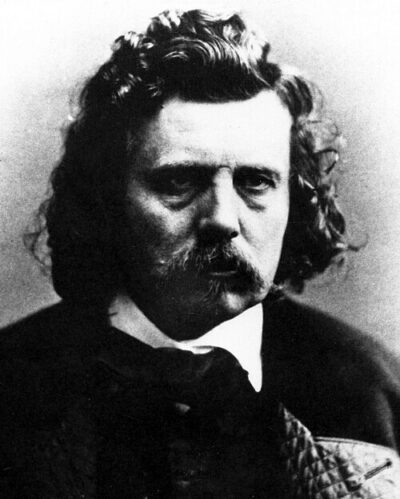
- Emanuel Leutze
- Genre
- landscape painting
All 4 facts, and where they come from
Facts
4 facts · 0 confirmed by two sources · 2 cited · 2 from one source
Where this comes from
Papalocal keeps its own record. It started from these sources; what each one said is kept here as it was copied, so a change on their side never changes this page by itself. Tap one to read its version.
What Wikidata says · copied November 17, 2026 · revision 2396073499
- Described as
- painting by Emanuel Leutze
- What it is
- painting
- Created by
- Emanuel Leutze · 1 reference
- Genre
- landscape painting
- Came out
- 1862 · 1 reference
- Wikipedias with a page
- 7
Wikidata item Q7989813 (wikidata.org/wiki/Q7989813), public domain (CC0). Copied 2026-11-17.
What Wikipedia says · copied November 17, 2026 · revision 1361440496
Westward the Course of Empire Takes Its Way (also known as Westward Ho) is a 20-by-30-foot (6.1 m × 9.1 m) painted mural displayed behind the western staircase of the House of Representatives chamber in the United States Capitol Building. The mural was painted by Emanuel Gottlieb Leutze in 1861 and symbolizes Manifest Destiny, the belief that the United States was destined for Western exploration and expansion originating from the initial colonies along the Atlantic seaboard to the Pacific Ocean. A study measuring 33+1⁄4 by 43+3⁄8 inches (84.5 cm × 110.2 cm) hangs in the Smithsonian American Art Museum.
From the Wikipedia article “Westward the Course of Empire Takes Its Way” (en.wikipedia.org/wiki/Westward_the_Course_of_Empire_Takes_Its_Way), by its contributors, under CC BY-SA 4.0 (creativecommons.org/licenses/by-sa/4.0/). Copied 2026-11-17; not changed.
Confirmed Two sources agree. Cited One source, and it names where it got it. One source One source, without a reference of its own. Sources disagree The sources disagree. We show the best-supported value and keep theirs below.
Picture: Emanuel Leutze, via Wikimedia Commons · Public domain