Xi Jinping Thought on Socialism with Chinese Characteristics for a New Era
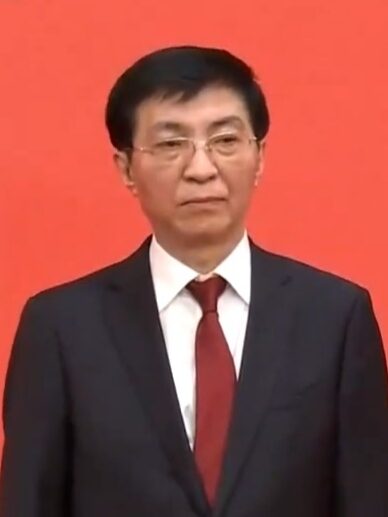
Xi Jinping Thought on Socialism with Chinese Characteristics for a New Era is a political theory attributed to Xi Jinping, the General Secretary of the Chinese Communist Party. It was created by Wang Huning. It stands for neoauthoritarianism, Conservatism in China and Chinese nationalism.
- Created by
- Xi Jinping
All 9 facts, and where they come from
Facts
9 facts · 0 confirmed by two sources · 0 cited · 9 from one source
Where this comes from
Papalocal keeps its own record. It started from these sources; what each one said is kept here as it was copied, so a change on their side never changes this page by itself. Tap one to read its version.
What Wikidata says · copied November 17, 2026 · revision 2515997499
- Described as
- a political theory attributed to Xi Jinping, the General Secretary of the Chinese Communist Party
- Other names
- Xi Jinping Thought, 习近平总书记思想, 習近平總書記思想
- What it is
- political theory; political ideology; thought
- Created by
- Xi Jinping; Wang Huning
- Ideology
- neoauthoritarianism; Conservatism in China; Chinese nationalism
- Named after
- Xi Jinping
- Wikipedias with a page
- 28
Wikidata item Q38247759 (wikidata.org/wiki/Q38247759), public domain (CC0). Copied 2026-11-17.
What Wikipedia says · copied November 17, 2026 · revision 1379997798
Xi Jinping Thought on Socialism with Chinese Characteristics for a New Era, commonly abbreviated outside China as Xi Jinping Thought or Xi-ism, is a political doctrine created during the general secretaryship of Xi Jinping of the Chinese Communist Party (CCP).
In January 2013, Xi's speeches at the CCP's 18th National Congress in 2012 were collectively termed "General Secretary Xi Jinping's Series of Important Speeches", followed by a campaign within the CCP to study Xi's speeches. These developed into Xi Jinping Thought, which was first officially mentioned at the CCP's 19th National Congress in 2017 when it was incorporated into the CCP constitution. In 2018, at the first session of the 13th National People's Congress, the preamble of the state constitution was amended to mention Xi Jinping Thought.
According to the CCP, Xi Jinping Thought "builds on and further enriches" previous iterations of CCP ideology and has also been called as the "Marxism of contemporary China and of the 21st century" and "a new breakthrough in the Sinicization of Marxism". It is a component of the theoretical system of socialism with Chinese characteristics and the development of Marxism–Leninism, Mao Zedong Thought, Deng Xiaoping Theory, the Three Represents and the Scientific Outlook on Development. The theory's main elements are summarized in the ten affirmations, the fourteen commitments, the thirteen areas of achievements, and the six musts.
From the Wikipedia article “Xi Jinping Thought” (en.wikipedia.org/wiki/Xi_Jinping_Thought), by its contributors, under CC BY-SA 4.0 (creativecommons.org/licenses/by-sa/4.0/). Copied 2026-11-17; not changed.
Confirmed Two sources agree. Cited One source, and it names where it got it. One source One source, without a reference of its own. Sources disagree The sources disagree. We show the best-supported value and keep theirs below.
Picture: Wikimedia Commons: A political slogan on the wall in Longhua District, Shenzhen, Guangdong, China, picture1.jpg · See Commons file page