

Yes
Yes is an English progressive rock band. It was founded in 1968. It won the Rock and Roll Hall of Fame.
- Founded
- 1968
- Genre
- progressive rock
- Record label
- Atlantic Records
- Country of origin
- United Kingdom
All 10 facts, and where they come from
Facts
10 facts · 0 confirmed by two sources · 0 cited · 10 from one source
Where this comes from
Papalocal keeps its own record. It started from these sources; what each one said is kept here as it was copied, so a change on their side never changes this page by itself. Tap one to read its version.
What Wikidata says · copied November 17, 2026 · revision 2522656784
- Described as
- English progressive rock band
- Other names
- Yes!
- What it is
- musical group
- Genre
- progressive rock; symphonic rock; art rock
- Country of origin
- United Kingdom
- Record label
- Atlantic Records; Atco Records
- Founded
- 1968
- Awards
- Rock and Roll Hall of Fame (2017) · 1 reference
- Official website
- https://yesworld.com
- Wikipedias with a page
- 63
Wikidata item Q184386 (wikidata.org/wiki/Q184386), public domain (CC0). Copied 2026-11-17.
What Wikipedia says · copied November 17, 2026 · revision 1386070129
Yes are an English progressive rock band formed in London in 1968. Having featured 20 full-time musicians across their history, their most notable members include lead singer Jon Anderson, bassist Chris Squire, guitarists Steve Howe and Trevor Rabin, drummers Bill Bruford and Alan White, and keyboardists Tony Kaye and Rick Wakeman, who represented Yes when they were inducted into the Rock and Roll Hall of Fame in 2017. Widely regarded as progressive rock pioneers, the group have explored several musical styles and remain one of the most successful, influential, and longest-lasting acts in the genre. Their discography spans 25 studio albums, with 13.5 million Recording Industry Association of America (RIAA)-certified albums sold in the United States and more than 30 million worldwide.
Founded by Anderson, Squire, Bruford, Kaye, and guitarist Peter Banks, Yes began performing a mix of original songs and covers spanning rock, pop, blues, and jazz, as showcased on their first two albums, Yes (1969) and Time and a Word (1970). A change of direction in 1970 following the replacement of Banks with Howe led to a series of celebrated progressive rock albums, including four consecutive US platinum or multi-platinum sellers: The Yes Album (1971); Fragile (1971), which included the hit single "Roundabout"; Close to the Edge (1972); and the live album Yessongs (1973). Subsequent releases, including Tales from Topographic Oceans (1973), Going for the One (1977), and Tormato (1978), also achieved major commercial success. Yes earned a reputation for their elaborate stage sets, light displays, and iconic album covers designed by Roger Dean. Personnel shifted frequently during this era; following the 1980 departures of Anderson and Wakeman, Yes recruited keyboardist Geoff Downes and singer Trevor Horn of the Buggles for the album Drama (1980) before the group dissolved the following year.
In 1983, Squire, White, Anderson, Kaye, and Rabin reformed Yes. Rabin's songwriting moved the group toward a mainstream pop-rock sound, resulting in their highest-selling album, 90125 (1983). This release featured the group's only US number-one single, "Owner of a Lonely Heart", and won a Grammy Award for Best Rock Instrumental Performance for the track "Cinema". The follow-up album, Big Generator (1987), was also successful. In 1989, the offshoot group Anderson Bruford Wakeman Howe formed and released a self-titled album. At the suggestion of their record company, both factions merged into a short-lived eight-piece line-up for Union (1991) and its corresponding tour. Yes continued to tour regularly and release albums—including the symphonically backed Magnification (2001)—before entering a temporary hiatus in 2004.
Following the cancellation of a 2008 tour due to Anderson's health, Yes enlisted Benoît David as their new lead singer and resumed activity. Jon Davison replaced David in 2012. Squire died in 2015, leaving the band with no remaining original members. Three former members toured separately as Yes Featuring Jon Anderson, Trevor Rabin, Rick Wakeman from 2016 to 2018. White, the longest-tenured member at the time, died in 2022. Since February 2023, the band's line-up has consisted of Howe, Downes, Davison, bassist Billy Sherwood, and drummer Jay Schellen. Their latest studio album, Aurora, was released in June 2026.
From the Wikipedia article “Yes (band)” (en.wikipedia.org/wiki/Yes_(band)), by its contributors, under CC BY-SA 4.0 (creativecommons.org/licenses/by-sa/4.0/). Copied 2026-11-17; not changed.
Confirmed Two sources agree. Cited One source, and it names where it got it. One source One source, without a reference of its own. Sources disagree The sources disagree. We show the best-supported value and keep theirs below.
Picture: Wikimedia Commons: Yes concert.jpg · See Commons file page
People connected 8
Members
 Rick WakemanEnglish keyboardist
 Jon Anderson (1968–2004)English musician
 Trevor Horn (1980–1981)British record producer and musician
 Steve HoweEnglish guitarist
 Bill Bruford (1968–1992)English drummer
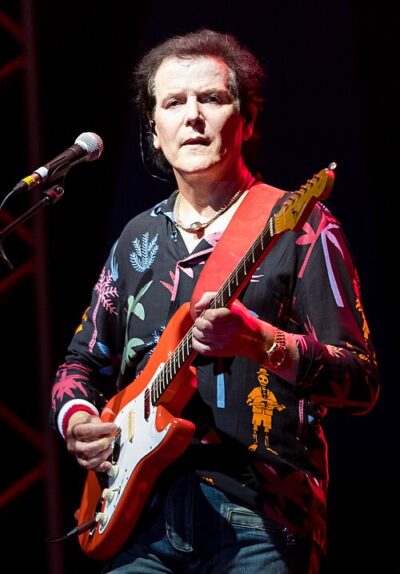 Trevor Rabin (1982–1994)South African musician (born 1954)
 Chris SquireBritish musician
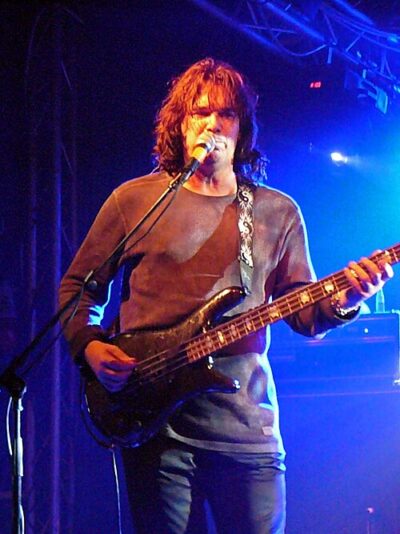 Billy SherwoodAmerican musician
