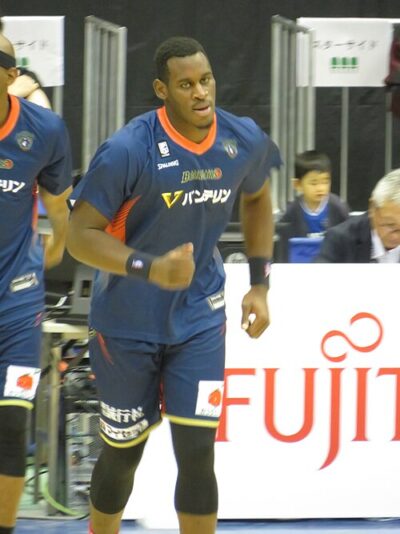
Yokohama B-Corsairs
Yokohama B-Corsairs is a Japanese professional basketball team. It plays in the Japan Professional Basketball League. Its home is Yokohama International Swimming Pool.
- Sport
- basketball
- League
- Japan Professional Basketball League
- Located in
- Yokohama
- Home venue
- Yokohama International Swimming Pool
All 9 facts, and where they come from
Facts
9 facts · 0 confirmed by two sources · 1 cited · 8 from one source
Where this comes from
Papalocal keeps its own record. It started from these sources; what each one said is kept here as it was copied, so a change on their side never changes this page by itself. Tap one to read its version.
What Wikidata says · copied November 21, 2026 · revision 2483076742
- Described as
- Japanese professional basketball team
- What it is
- basketball team
- Headquarters
- Yokohama
- Located in
- Yokohama
- Country
- Japan
- Sport
- basketball
- League
- Japan Professional Basketball League
- Home venue
- Yokohama International Swimming Pool
- Named after
- pirate · 1 reference
- Official website
- https://b-corsairs.com/
- Wikipedias with a page
- 5
Wikidata item Q11542875 (wikidata.org/wiki/Q11542875), public domain (CC0). Copied 2026-11-21.
What Wikipedia says · copied November 21, 2026 · revision 1366647448
The Yokohama B-Corsairs (横浜ビー・コルセアーズ, Yokohama Bii Koruse'a-zu) are a Japanese professional basketball team based in Yokohama. The team competes in the B.League Premier, the highest division of the B.League, as a member of the Eastern Conference. The team plays its home games at Yokohama International Swimming Pool.
Following the team's establishment in 2010, they participated in the Eastern Conference of the bj league for five seasons and in 2013 became the first team based in the Kanto region of Japan to win the league's championship.
From the Wikipedia article “Yokohama B-Corsairs” (en.wikipedia.org/wiki/Yokohama_B-Corsairs), by its contributors, under CC BY-SA 4.0 (creativecommons.org/licenses/by-sa/4.0/). Copied 2026-11-21; not changed.
Confirmed Two sources agree. Cited One source, and it names where it got it. One source One source, without a reference of its own. Sources disagree The sources disagree. We show the best-supported value and keep theirs below.