Zermelo–Fraenkel set theory
Zermelo–Fraenkel set theory is a variant of ZFC, the standard axiomatic set theory.
All 3 facts, and where they come from
Facts
3 facts · 0 confirmed by two sources · 0 cited · 3 from one source
Where this comes from
Papalocal keeps its own record. It started from these sources; what each one said is kept here as it was copied, so a change on their side never changes this page by itself. Tap one to read its version.
What Wikidata says · copied November 17, 2026 · revision 2552976494
- Described as
- variant of ZFC, the standard axiomatic set theory
- Other names
- ZF theory, set theory, ZF set theory, Zermelo-Fraenkel set theory, Zermelo-Fraenkel axioms, ZF
- What it is
- set theory
- Named after
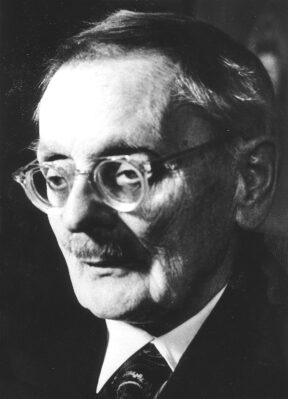
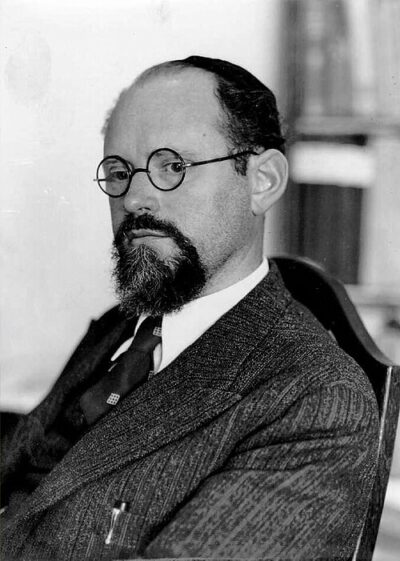
- Abraham Fraenkel; Ernst Zermelo
- Wikipedias with a page
- 32
Wikidata item Q191849 (wikidata.org/wiki/Q191849), public domain (CC0). Copied 2026-11-17.
What Wikipedia says · copied November 17, 2026 · revision 1385892549
In set theory, Zermelo–Fraenkel set theory, named after mathematicians Ernst Zermelo and Abraham Fraenkel, is an axiomatic system that was proposed in the early twentieth century in order to formulate a theory of sets free of paradoxes such as Russell's paradox. Today, Zermelo–Fraenkel set theory, with the historically controversial axiom of choice (AC) included, is the standard form of axiomatic set theory and as such is the most common foundation of mathematics. Zermelo–Fraenkel set theory with the axiom of choice included is abbreviated ZFC, where C stands for "choice", and ZF refers to the axioms of Zermelo–Fraenkel set theory with the axiom of choice excluded.
Informally, Zermelo–Fraenkel set theory is intended to formalize a single primitive notion, that of a hereditary well-founded set, so that all entities in the universe of discourse are such sets. Thus the axioms of Zermelo–Fraenkel set theory refer only to pure sets and prevent its models from containing urelements (elements that are not themselves sets). Furthermore, proper classes (collections of mathematical objects defined by a property shared by their members where the collections are too big to be sets) can only be treated indirectly. Specifically, Zermelo–Fraenkel set theory does not allow for the existence of a universal set (a set containing all sets) nor for unrestricted comprehension, thereby avoiding Russell's paradox. Von Neumann–Bernays–Gödel set theory (NBG) is a commonly used conservative extension of Zermelo–Fraenkel set theory that does allow explicit treatment of proper classes.
There are many equivalent formulations of the axioms of Zermelo–Fraenkel set theory. Most of the axioms state the existence of particular sets defined from other sets. For example, the axiom of pairing implies that given any two sets a and b there is a new set {a,b} containing exactly a and b. Other axioms describe properties of set membership. A goal of the axioms is that each axiom should be true if interpreted as a statement about the collection of all sets in the von Neumann universe (also known as the cumulative hierarchy).
The metamathematics of Zermelo–Fraenkel set theory has been extensively studied. Landmark results in this area established the logical independence of the axiom of choice from the remaining Zermelo-Fraenkel axioms and of the continuum hypothesis from ZFC. The consistency of a theory such as ZFC cannot be proved within the theory itself, as shown by Gödel's second incompleteness theorem.
From the Wikipedia article “Zermelo–Fraenkel set theory” (en.wikipedia.org/wiki/Zermelo–Fraenkel_set_theory), by its contributors, under CC BY-SA 4.0 (creativecommons.org/licenses/by-sa/4.0/). Copied 2026-11-17; not changed.
Confirmed Two sources agree. Cited One source, and it names where it got it. One source One source, without a reference of its own. Sources disagree The sources disagree. We show the best-supported value and keep theirs below.